





Everything you need to know about hallway and entryway lamps
Key takeaways:
- A hallway lamp is a table lamp placed on a console, a sideboard or a shelf in the entryway, in addition to the ceiling light or the wall sconces.
- Choose it according to the depth of the furniture and the width of the passage, then according to the style of the entryway, with a warm light of 2700 to 3000 K.
- It plugs into a simple outlet: keep the cable out of the walkway, prefer an LED bulb and dust the lamp with a soft cloth while it is unplugged.
A hallway lamp is a small or medium-sized table lamp placed on a console, a sideboard or a shelf to provide ambient light in the entryway. Hallway lighting plays an essential role in creating a welcoming and safe home, and it deserves to be chosen with care, for both the function and the look of a space that is too often overlooked.
This guide helps you choose and set up the hallway lamps that will complement the main lighting of the room, taking current trends and good practice into account.
The role of a lamp in the hallway
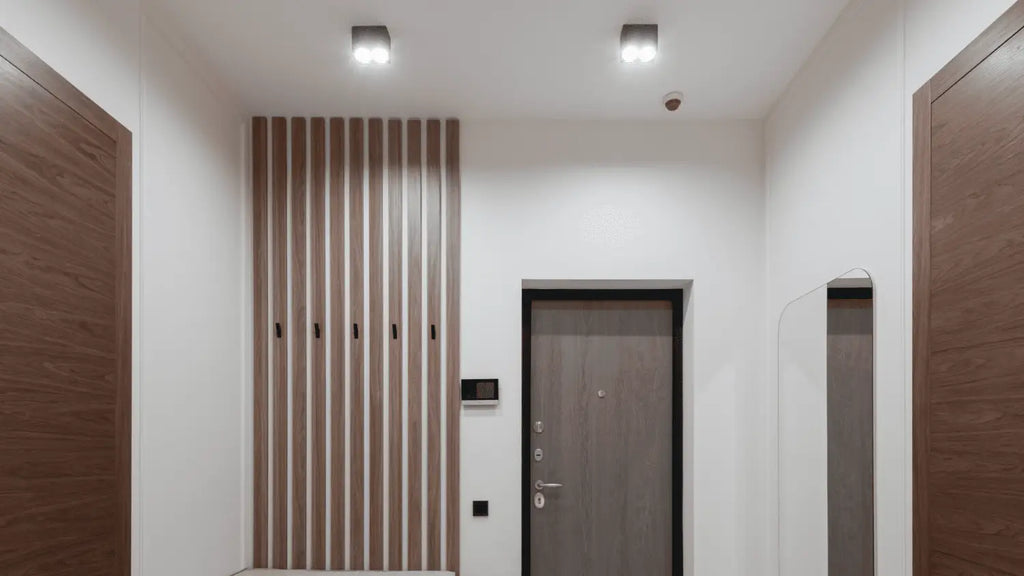
General hallway lighting is most often provided by a ceiling light or by wall sconces. A table lamp also adds a soft ambient light, ideal in the evening, when you do not want to turn on the whole house.
It also becomes a real decorative element on a console, a sideboard or a shelf. A single well-chosen lamp is enough to create a warm welcome and to highlight a place that we usually just walk through.
What types of lamps for the hallway?
Globe lamps
A globe made of opal glass or smoked glass, mounted on a gold base or on a marble plinth depending on the model, brings a soft light and an elegant look to the entryway. Its very simple round shape goes with almost any piece of furniture.
It is an easygoing model that lights in all directions and stays discreet when turned off. You will find other shapes among our glass lamps, some of them in hammered glass.
Sculptural lamps
Organic shapes, resin, hammered glass or ceramic: a sculptural lamp becomes the statement piece of the entryway and welcomes your guests with character. It is looked at like a decorative object, whether on or off.
This type of light fixture needs a little space around it, and is therefore better suited to an uncluttered entryway. Our design lamps bring together these vase-shaped or dome-shaped pieces.
Compact lamps
In a narrow hallway, a small table lamp with a small base easily finds its place on a shallow piece of furniture, without ever getting in the way of the passage.
Many of these small formats were originally bedside lamps, whose dimensions suit a console just as well: our bedside lamps collection offers a wide choice.
Ceiling lights and wall sconces, for general lighting
Ceiling lights are an excellent solution for general hallway lighting. They come in many styles, from modern to classic, flush with the ceiling or slightly suspended, and LED models stand out for their low consumption and longevity, as shown by our hallway ceiling lights.
Wall sconces bring an elegant and functional touch: placed at regular intervals along the walls, they give even lighting. Models in brass or frosted glass are appreciated for their refined look, and unvarnished brass develops a patina over time. Like a ceiling light, a hallway wall sconce must be installed and connected by a qualified electrician.
LED lamps and light fixtures with a motion sensor
LED lamps are ideal in a hallway, because of their low consumption and long lifespan. Available in several color temperatures, they create a warm or a more dynamic atmosphere depending on your needs, and since they give off very little heat, they can safely be used for extended use.
Light fixtures with a motion sensor improve safety and comfort: they turn on by themselves as soon as someone enters the hallway, without having to look for the switch. They are most useful near entrances and staircases, and usually come as a ceiling light or a wall sconce.
How to choose your hallway lamp?
According to the space
Before choosing, assess the size of the hallway and identify the areas that need particular lighting. A long, narrow hallway calls for even lighting, whereas a wide hallway benefits from several light sources, including a table lamp.
Then match the size of the lamp to that of the furniture and the passage. Check the dimensions on the product page, in particular the depth of the base for a narrow console, so that the lamp does not extend beyond the top.
According to the style
Select a light fixture that complements the style of your home: gold metal and glass for a chic entryway, ceramic or wood for a natural atmosphere, sculptural shapes for a contemporary decor. A gold lamp, for example, warms up a dark console.
The same logic applies to the rest of the lighting: a modern ceiling light in brushed metal suits a contemporary atmosphere, whereas a vintage brass wall sconce goes with a classic interior. The key is that each light fixture blends with the overall decoration, and our ceramic lamps add a more natural touch.
According to the light
A warm light, around 2700 to 3000 K, creates a warm welcome. LED bulbs use little power, which is practical for a lamp that is often on in the evening, and they come in several intensities.
Also look for a good balance between direct and indirect light: ceiling lights and wall sconces combine to light evenly without causing glare. Finally, take into account ease of maintenance and compatibility with LED bulbs, for a durable and economical solution.
| Hallway type | Recommended lamp | Tip |
|---|---|---|
| Spacious entryway | Sculptural lamp or large globe | Place on a console, under a mirror |
| Narrow hallway | Compact lamp with a small base | Check the depth of the furniture |
| Hallway without a window | Opal globe lamp | Light of 3000 to 4000 K and light-colored surfaces |
| Long hallway | Accent lamp at the end of the passage | Complement with regularly spaced wall sconces |
Layout tips
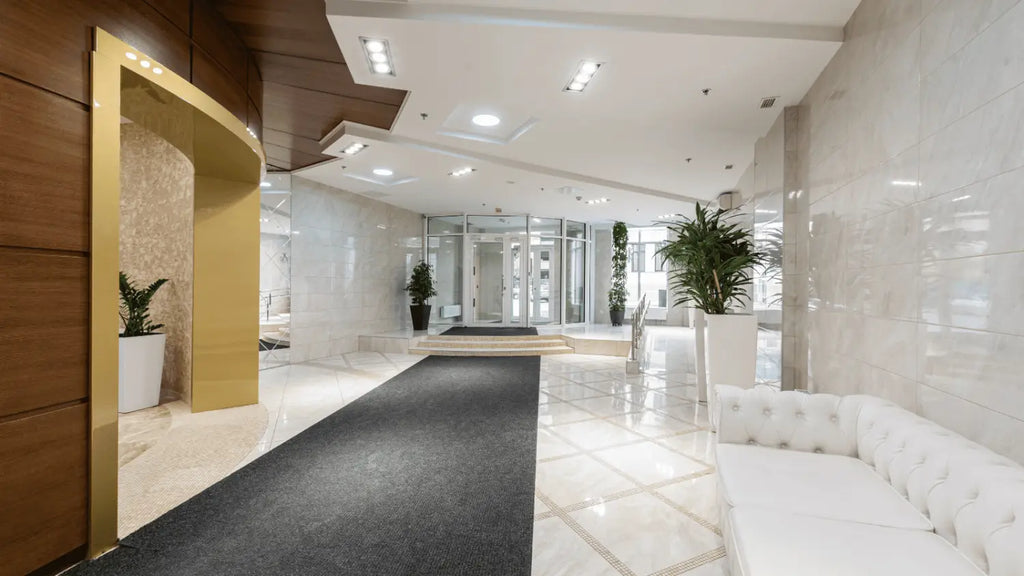
Place the lamp on a console, with a mirror above it to reflect the light and visually enlarge the space. Make sure the cable does not cross the walkway, to avoid any risk of tripping, or choose one of our cordless lamps when there is no outlet nearby.
To avoid dark areas, distribute the light fixtures at regular intervals along the whole length of the hallway. Recessed spotlights or wall sconces provide even diffusion, and well-distributed light improves both the safety and the look of the place.
Accent lighting and night guide lights
Use light to highlight a painting or a sculpture. Adjustable spotlights and directional wall sconces create focal points, and well-thought-out accent lighting gives the hallway depth and visual interest.
At night, prefer discreet guide lighting: night lights or LED strips at floor level give enough light to move around without disturbing the rest of the house. Light fixtures with a motion sensor are particularly handy in a hallway that is often used at night.
Mixing types of lighting
Combine several types of light fixtures for complete lighting: a ceiling light for general light, wall sconces for accent, and table lamps or a hallway floor lamp for additional points of light. A chandelier or a hallway pendant light adds a touch of elegance and sophistication, provided it matches the style of the interior.
For a muted atmosphere, favor a soft, diffuse light: concealed LED strips and lamps with fabric shades, fitted with an LED bulb that gives off little heat, create a warm and comfortable ambiance. LED bulbs and low-consumption light fixtures also lower the electricity bill while offering a fine quality of light, especially with a ceiling light with a motion sensor.
Maintenance
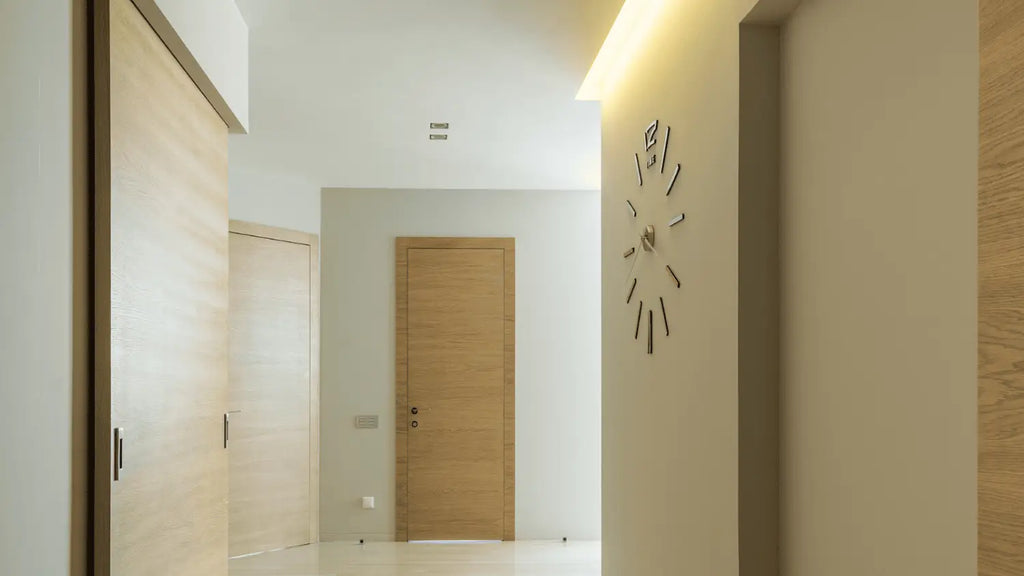
Dust the lamp regularly with a soft cloth, with the lamp unplugged, to keep its shine. Avoid harsh chemicals, which could damage the gold finishes, the glass or the ceramic.
When replacing the bulb, choose an LED, which uses less power and lasts much longer than a conventional bulb. Make sure it is compatible with the light fixture, observing the base and the maximum wattage indicated on the product page, to rule out any risk of overheating.
Conclusion
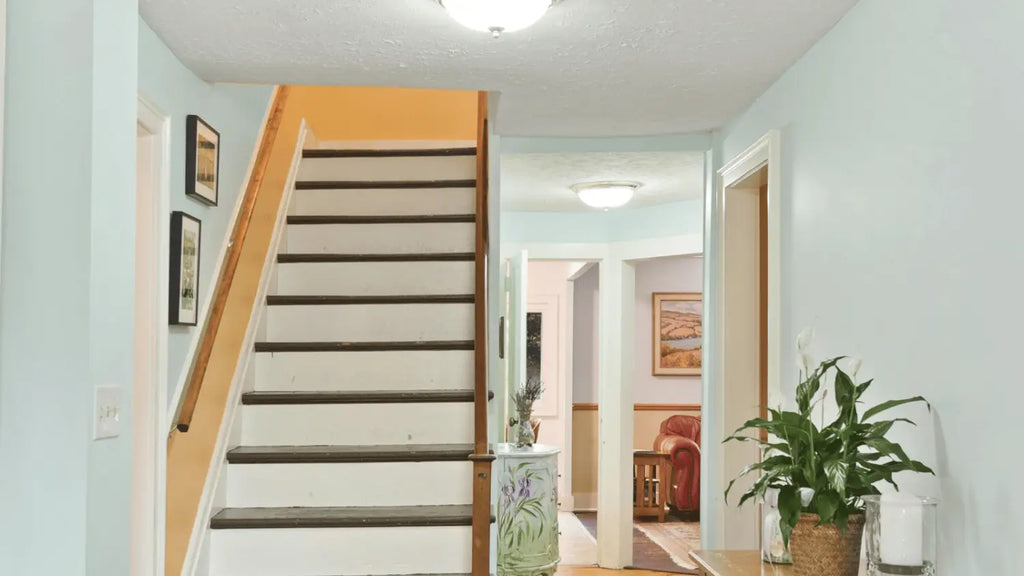
A well-chosen lamp transforms the hallway and the entryway into a welcoming and functional space. By following these tips, you will find a lighting solution suited to your needs as well as to your style, combining several types of lighting where needed.
Each product page details the dimensions, the materials and the bulb type of the lamp, which lets you compare models before choosing. Discover the Lustria selection to find the one that will showcase this place of passage, then browse our hallway light fixtures to complete the lighting.
Frequently asked questions about hallway lamps
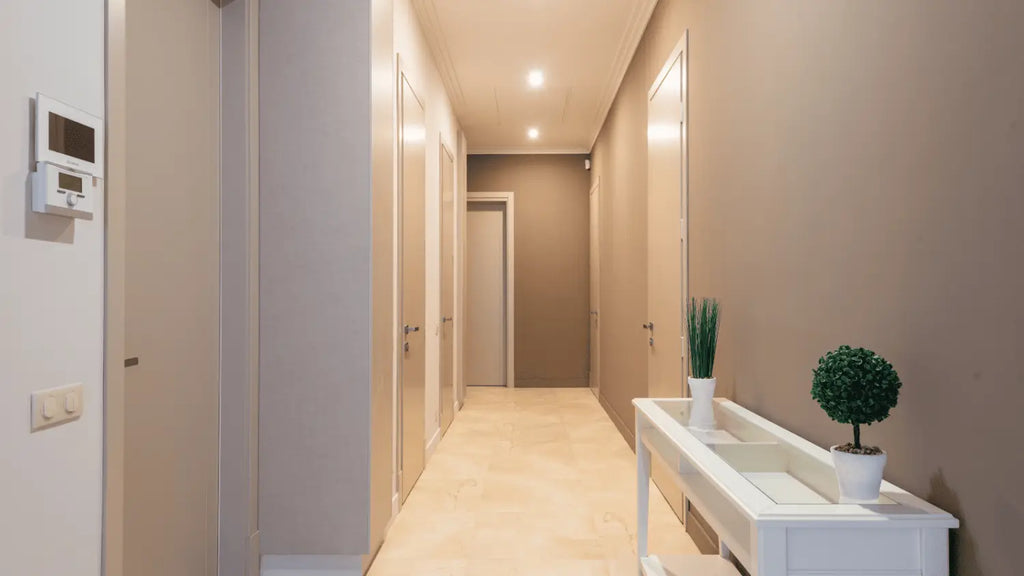
Which lamp to choose for an entryway?
An elegant table lamp on a console, such as an opal globe or a sculptural lamp, creates a warm and decorative welcome. The best choice then depends on the layout and style of your space.
For general lighting, LED ceiling lights and wall sconces remain the most common, because they light evenly while using little power. Under a low ceiling, recessed light fixtures give a discreet light that does not take up space.
How to light a small hallway?
In addition to the main lighting, choose a compact lamp with a narrow base, and rely on light colors and a mirror to make the most of the light.
Space-saving light fixtures are best, such as recessed spotlights or slim wall sconces, while reflective surfaces bounce the brightness toward the end of the hallway.
Where to place a lamp in a hallway?
On a console, a sideboard or a shelf, with the cable out of the walkway. Ideally, install it near the front door, where it is really useful every day.
Avoid corners where a door could hit it when opening, and keep an outlet nearby: a table lamp simply plugs in.
Which color temperature to choose?
A warm light, around 2700 to 3000 K, for a welcoming atmosphere. A more neutral light, around 4000 K, for a hallway without a window where you want more brightness.
Keep the same shade for all the light fixtures in the hallway, to avoid an unharmonious mix of whites.
Are LEDs suitable for a hallway lamp?
Yes, they are perfectly suitable: they use little energy and last a long time, which is ideal for a lamp that is turned on regularly. They also come in several color temperatures, to create the desired atmosphere.
They require less electricity than traditional bulbs and are replaced far less often. On a dimmer, check that the bulb is marked "dimmable".
What style of lamp for a modern hallway?
Clean lines and contemporary materials, glass, brushed metal, chrome or gold, or a sculptural shape for a current touch. Geometric designs and matte finishes are very fashionable, as are recessed ceiling lights, minimalist wall sconces and LED strips.
In 2026, trends also highlight brass and minimalist pendant lights, in Scandinavian or industrial spirits appreciated for their simplicity. Our modern lamps give a good overview.
How many lumens are needed to light a hallway?
There is no single figure: the need depends on the length of the hallway, the color of the walls and the presence of a window. The luminous flux of each lamp, expressed in lumens, is given on its product page and lets you compare models, the goal being clear visibility without glare.
In a longer or wider hallway, increase the total in proportion and spread it across several light fixtures, to keep the lighting even.
How to light a long, narrow hallway?
By spreading several light sources along the whole length: ceiling lights, recessed spotlights or wall sconces placed at regular intervals prevent dark areas. Wall sconces also add relief and visual interest to the walls.
An LED strip along the baseboards also gives a continuous and discreet light.
How to light a hallway without a window?
With effective artificial lighting that comes close to natural light: LED bulbs with a color temperature between 3000 and 4000 K work well.
Ceiling lights and wall sconces provide even light, while mirrors and reflective surfaces spread it and visually enlarge the space.
Are light fixtures with a motion sensor effective in a hallway?
Yes, they are very effective: they turn on automatically as soon as someone enters the hallway, which brings comfort and safety. This is particularly useful at night, or in a high-traffic area.
For a table lamp, check the product page for the intended switching mode.
How to install a light fixture in a hallway?
A table lamp requires no installation: simply place it on a stable piece of furniture and plug it into an outlet.
A ceiling light, a wall sconce or a pendant light, on the other hand, is fixed to the wall or the ceiling and connected to the mains, with the power switched off at the panel. This work must be entrusted to a qualified electrician, who checks the mounting and stability of each light fixture before restoring the power.