



187 products


Everything you need to know about bathroom lighting
Key takeaways:
- A bathroom light is a fixed light fixture designed for a damp room, most often a wall sconce, with an IP rating of IP44 at minimum.
- The most useful selection criterion is placement: neutral, shadow-free light around the mirror, complemented by general lighting on the ceiling.
- The NF C 15-100 standard defines safety zones around the shower and the bathtub: installation and connection must be entrusted to a qualified electrician.
A bathroom light is a fixed light fixture designed for a damp room, able to withstand steam and water splashes. The bathroom is indeed a special room when it comes to lighting, since humidity and the presence of water impose strict safety rules. Well chosen and properly installed, wall sconces provide precise light around the mirror and a pleasant atmosphere.
The importance of good lighting in the bathroom
Good lighting is essential to make the bathroom a functional and attractive space. Light plays a decisive role in how a space is perceived, and it is often enough to turn an ordinary bathroom into a welcoming and pleasant place.
By choosing suitable lights, you improve the look of the room and encourage an atmosphere that suits both relaxation and the daily routine. Well-distributed lighting also makes the room safer to use, because it eliminates shadowy areas.
Safety first: zones and IP rating
In France, the NF C 15-100 standard divides the bathroom into zones, called safety volumes, according to proximity to the bathtub or the shower. Each volume requires a minimum level of protection and a permitted type of fixture. The IP rating, which indicates protection against solid objects and water, is one of the criteria, but not the only one.
In a bathroom, an IP44 rating is a minimum, and some volumes require more. Before choosing a sconce, check its rating on the product page and make sure it matches the intended zone: a light fixture rated IP20 is reserved for dry rooms.
Installation and connection must always be entrusted to a qualified electrician, who confirms the location according to the volumes. Finally, remember that an ordinary table lamp plugged into an outlet cannot be used in a bathroom, nor can an indoor floor lamp.
Types of bathroom lights
A well-lit bathroom combines general lighting, which fills the whole room, and targeted lighting, as close to the mirror as possible. Four families of light fixtures share these roles, as summarized in this table.
| Type of light fixture | Role in the room | Tip |
|---|---|---|
| Wall sconce | Targeted light around the mirror | On each side of the mirror, or above it |
| Ceiling light | General, even lighting | Well suited to low ceilings |
| Recessed spotlights | Directed, discreet light | To highlight the mirror or the storage |
| LED strip | Soft supplementary light | To complement the other sources |
Wall sconces
Wall sconces are ideal for targeted lighting around mirrors. They provide direct light, perfect for skincare and makeup, and our bathroom wall sconces bring together many shapes, from the silver metal LED sconce to the black aluminum model.
Black metal sconces add a modern and elegant touch, as shown by our black wall sconces. Some models also have a touch dimmer, which lets you adjust the light intensity to suit your needs.
Ceiling lights
Ceiling lights are an excellent option for overall lighting: practical, they give off an even light. There are many variants, from the compact LED ceiling light to the three-light model in metal and glass, to be found among our bathroom ceiling lights.
They are particularly suitable for bathrooms with a low ceiling, or for spaces where a pendant light would not be practical. Smoked glass ceiling lights add a modern and sophisticated effect, while recessed models offer a discreet and elegant solution, suited to small spaces.
LED and recessed spotlights
LED spotlights and recessed lights are perfect for directed, discreet lighting. They highlight specific features of the bathroom, such as the mirror or the cabinets, whether it is a recessed spotlight near the mirror or a two-spot ceiling light, like our recessed spotlights.
LED spotlights offer great flexibility, and adjustable models are particularly practical, since they direct the light exactly where you need it. Check that they have an IP rating of IP44 at minimum, a guarantee of safety in a damp environment.
LED strips
LED strips are valued for their even and efficient lighting, around the mirror or under a piece of furniture. They give off a soft light, which suits everyday tasks well.
Energy-efficient, they use little electricity and last much longer than a conventional bulb. They are used to complement the other sources, for balanced lighting, as long as you choose a model designed for damp rooms and have a qualified electrician carry out the connection.
Lighting the mirror well
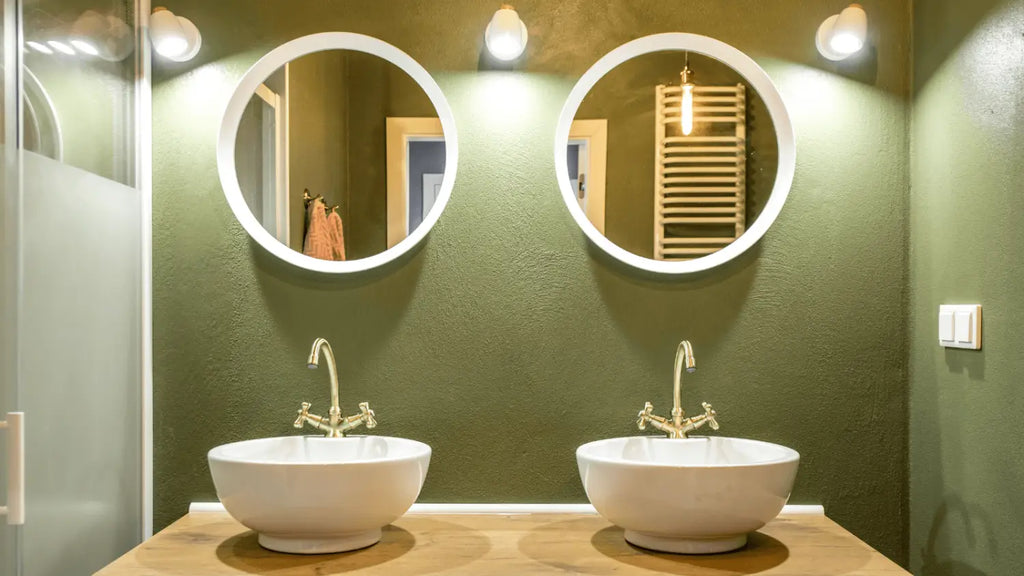
For shadow-free light on the face, place a sconce on each side of the mirror, or one sconce above it. A neutral light, between 3000 and 4000 K, renders colors well for makeup or shaving.
Two identical sconces, placed at face height, light both cheeks equally, whereas lighting from the ceiling alone deepens the features.
How to light your bathroom well
Beyond the mirror, three settings matter throughout the room: the intensity of the light, the placement of the fixtures and the atmosphere you want.
Choosing the right light intensity
The light intensity is decisive for achieving a pleasant and functional atmosphere. Light that is too strong dazzles, while light that is too weak makes the room dark and unwelcoming.
It is therefore wise to choose lights with adjustable intensity, which adapt to different occasions. Dimmers create a warm atmosphere, while ensuring good visibility for personal care. With an LED, check that the bulb is marked "dimmable", as on our dimmable wall sconces.
Placing the lights well
The height and placement of the lights are essential for successful lighting. Sconces are installed at face level or just above the mirror, so as to avoid glare while giving enough light. Spotlights and strips, for their part, highlight specific areas, and the ceiling height matters for distributing the light well.
Table lamps and lanterns, which readily complement general lighting elsewhere in the home, have no place here, however: an ordinary plug-in lamp cannot be used in a bathroom.
Creating a pleasant atmosphere
Lights are chosen not only for their function, but also for their ability to enhance the overall atmosphere of the room. Dimmable LEDs and warm tones help create a welcoming atmosphere. Fabric shades tolerate humidity poorly: an opal glass diffuser gives the same soft effect here.
Choosing lights in amber glass or gold metal adds a note of warmth and sophistication. Smoked glass light fixtures, for their part, suit a soft and relaxing atmosphere, like our glass wall sconces.
Sconce styles
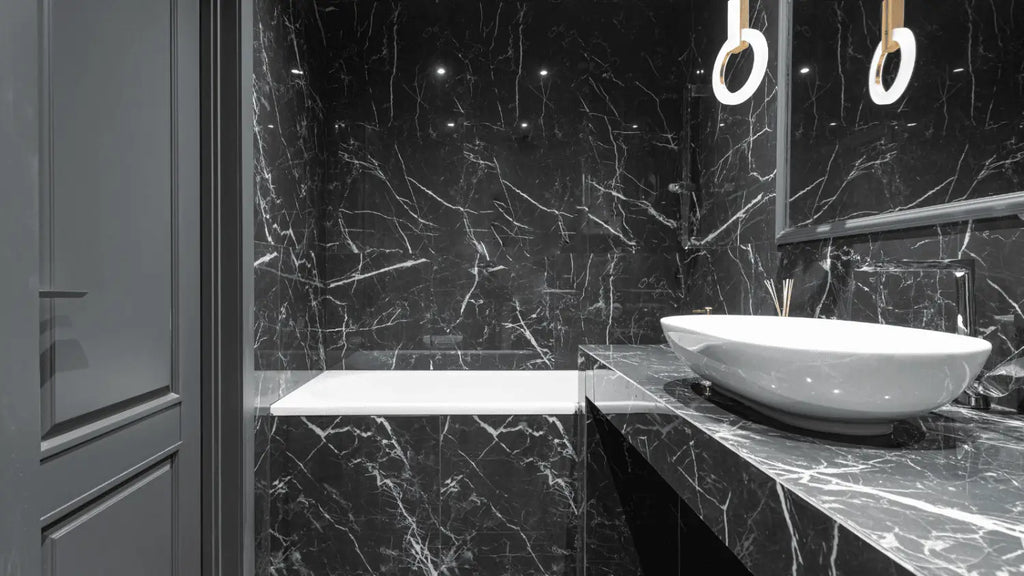
Minimalist black or white lines, gold or copper finishes, smoked glass, ceramic or original shapes: each sconce has its own style. For a harmonious result, match the finish of the sconce to that of the faucets and accessories.
Modern lights
Modern lights are characterized by their clean lines and contemporary materials, such as an LED sconce in chrome metal or an LED ceiling light with a very sober design. They add a touch of sophistication and modernity, as our modern wall sconces illustrate.
Black metal and amber glass give them an elegant, contemporary look. Some of these lights also have a touch control, to adjust the light intensity to your preferences.
Industrial lights
Industrial lights bring a sturdy and authentic touch to the decor. A black metal sconce or a glass ceiling light is enough to set this mood, which is ideal in a loft or workshop style bathroom, as our industrial wall sconces show.
Dark metal and smoked glass are their usual materials, and give the room a vintage atmosphere. These light fixtures are also valued for their sturdiness and durability.
Scandinavian lights
Scandinavian lights stand out for their simplicity and elegance. They often use natural materials such as wood and neutral colors: a light wood sconce or a white metal ceiling light are good examples, close to our Scandinavian wall sconces.
These lights create a warm and welcoming atmosphere, ideal in a Nordic-style bathroom, where function matters as much as looks. They also give a soft, even light, which sets up a relaxing mood.
Classic lights
Classic lights add a touch of charm and sophistication. A brass sconce or a glass ceiling light suit an elegant and timeless atmosphere, for lovers of a refined, traditional style.
Light fixtures combining white glass and gold metal are particularly valued for their classic, polished look. They also offer a soft, warm light, ideal for creating a serene atmosphere.
Frequently asked questions about bathroom lighting
Which types of light fixtures suit a bathroom?
Ceiling lights, recessed spotlights, wall sconces and mirror lights, as long as they are designed for a damp room.
The first two provide general lighting, while the sconces and the mirror lighting give targeted light, ideal for makeup and shaving. An ordinary table lamp plugged into an outlet cannot be used there: see our bathroom light fixtures instead.
What is the best light for the bathroom?
The one that meets your lighting needs and suits your decor. LED sconces and ceiling lights with adjustable intensity are very popular, for their low consumption and for the atmosphere they create.
Combine general lighting, accent lighting and functional lighting, bright enough without being dazzling, with a good color rendering index (CRI) and an IP rating suited to humidity.
How much lighting power does a bathroom need?
It all depends on the surface area of the room and the color of the walls: the larger or darker the bathroom, the more light it needs.
Rely on the luminous flux, expressed in lumens on the product page, rather than on watts. LED bulbs give good brightness without using much energy.
Are LEDs suitable for a bathroom?
Yes, perfectly. They use little energy, last a long time and come in several color temperatures, to create the desired atmosphere.
Be sure to choose a light fixture whose IP rating is suited to damp environments, IP44 or higher. Our LED wall sconces state this rating on their product page.
Can any sconce be installed in a bathroom?
No. The light fixture must be suited to the installation zone defined by the NF C 15-100 standard, which divides the room into safety volumes around the bathtub and the shower.
The IP rating, which indicates resistance to water and dust, must reach IP44 at minimum, and more depending on the volume. Check it on the product page and entrust the installation to a qualified electrician.
Where can I find the IP rating of a sconce?
On its product page and in its instructions. It is written with the letters IP followed by two digits: the first concerns solid objects, the second water.
The IP44 rating, which protects against water splashes, is a minimum, and the most exposed locations require more. If the rating is not suited to the intended zone, choose another location or another light fixture.
Can I install a sconce myself?
In a bathroom, no: the installation must comply with the NF C 15-100 standard and, for your safety, it must be entrusted to a qualified electrician.
The electrician switches off the power at the circuit breaker, fixes the light fixture according to the manufacturer's instructions, with supports suited to the wall or ceiling, then makes the connection.
Which light for the mirror?
A neutral light, between 3000 and 4000 K, placed on either side of or above the mirror to avoid shadows.
Wall sconces or LED strips installed on each side give even lighting, ideal for precision tasks such as makeup or shaving.
Which bathroom light styles are trending?
Minimalist light fixtures, integrated lighting and industrial-inspired models. Chrome finishes and brass are very popular, as are illuminated mirrors and hanging lights, like our bathroom pendant lights.
Choose a style that complements the decor of your bathroom, while staying practical every day.
How do I clean a bathroom sconce?
Switch off the power, let it cool, then wipe the sconce with a soft, dry cloth. Avoid abrasive products and direct water splashes.
Regular dusting limits limescale marks on the glass and the metal.