





Everything about kitchen light fixtures

Key takeaways:
- A kitchen light fixture is a ceiling light fixture, either a ceiling light or a pendant light, that provides the general lighting of the room as well as that of the island, the table or the dining area.
- Prefer a neutral light of around 4000 K for cooking, a warm light of 2700 to 3000 K for the dining area, and easy-to-clean materials such as metal or glass.
- The installation and connection of a pendant light or a ceiling light should be left to a qualified electrician, who also sets the height above the island and checks the IP rating near the sink.
A kitchen light fixture is a ceiling light fixture, most often a ceiling light or a pendant light, that lights both the whole room and the areas where you prepare and eat your meals. Lighting is an essential element of the kitchen, because it transforms not only the way you cook but also the atmosphere of the space.
Choosing the right light fixture requires attention to style, functionality and energy consumption: successful lighting combines practicality, for preparing meals, with aesthetics, which makes the room pleasant and welcoming. This selection brings together pendant lights and ceiling lights suited to the kitchen, from smoked glass globes to linear LED bars and models in natural fibers for the dining area. To see all of our models, browse our light fixture collection.
General lighting and island lighting

The choice of light fixture first depends on how much general lighting and how much task lighting the room needs. A kitchen ceiling light placed in the center spreads an even brightness over the whole space, ideal under a low ceiling, and modern models in black or chrome metal give it a contemporary look.
Above a central island or a table, pendant lights provide focused light and a decorative touch: two or three models in a row, or a single linear pendant light, concentrate the lighting on the preparation or dining area. Smoked glass and white metal give an elegant note to our kitchen pendant lights.
Supplementary lighting: spotlights, sconces and under-cabinet lamps
A few complementary sources make the kitchen more comfortable day to day. LED recessed spotlights, practical and functional, fit under cabinets or in specific areas to provide task lighting without glare. Lamps placed under the wall cabinets light the countertop directly, improve visibility and reduce shadows.
A kitchen wall sconce appeals through its soft light and its ability to light without taking up space on the countertop. Like spotlights, it is connected to the mains, and its installation is a job for a qualified electrician. On a sideboard, a table lamp, on the other hand, plugs into a simple outlet, for an ambient glow near the dining area.
| Kitchen area | Recommended light fixture | Tip |
|---|---|---|
| Whole room | Central ceiling light | Even light, suited to low ceilings |
| Central island | Two or three pendant lights in a row, or a linear pendant light | Height set by the electrician, without blocking the view |
| Table and dining area | Pendant light above the table | Warm light, dimmer if the model allows it |
| Countertop | Lighting under the wall cabinets | Neutral, direct light, without glare |
Choosing the right light
Choosing a pendant light is a balance between practical and aesthetic needs, and the tone of the light is part of it. For cooking, a neutral white of around 4000 K renders the colors of food faithfully, whereas a warm white, between 2700 and 3000 K, makes the dining area more convivial: this is the tone of our warm light fixtures.
LEDs with adjustable intensity let you vary the light, which is ideal for moving from the mood of a dinner to that of a kitchen in full swing: for an optimal installation, plan for a dimmer. Then check that the bulb or the light fixture is marked "dimmable", an option stated on the product page of our dimmable light fixtures.
Materials and styles
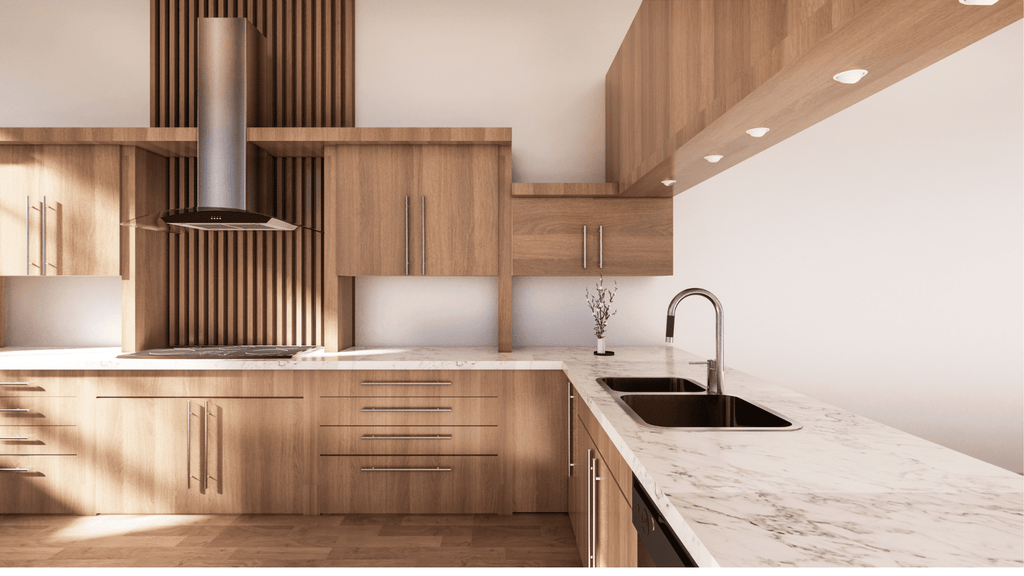
Metal, glass and clear acrylic are the most popular materials in the kitchen, for their modern look and ease of cleaning. Nickel or chrome details bring a refined finish, matte black a contemporary look, gold a more chic touch and ceramic a retro spirit. A glass light fixture also lets light through without making the room feel heavy.
Pendant lights in natural fibers or paper are best suited to the dining area, away from the cooktop and steam, and take only an LED bulb, which gives off little heat. In terms of style, the clean lines of a Scandinavian light fixture go well with bright wooden kitchens.
Installation and safety
A correct installation is decisive to get the most out of your light fixtures. A pendant light or a ceiling light is connected to the electrical network: leave the installation to a qualified electrician, who will set the height of the pendant lights so that they do not block the view and do not hang too low above the island. The usual guideline places the bottom of the light fixture between 70 and 90 cm above the countertop.
Near the sink or any area exposed to splashes and humidity, check the IP rating shown on the product page and the requirements of the NF C 15-100 standard according to the location. Keep light fixtures in natural fibers, paper or fabric away from the cooktop.
Technology also simplifies daily life: in passageways, lighting controlled by a motion sensor turns on by itself and then turns off, which avoids leaving the light on unnecessarily. This function depends on the chosen model or on the installation.
Maintenance
Keeping your light fixtures in good condition preserves their longevity and their performance, especially as cooking grease builds up quickly. Clean your pendant lights regularly to keep an optimal brightness and all their shine: switch off the power, let them cool, then wipe the metal and glass with a soft, dry cloth.
Avoid abrasive products and never put water on the electrical parts. For durability, favor LED sources, which last much longer than older bulbs and use little power.
Light fixtures and kitchen decor
Light fixtures are not only there to light: they also add an important decorative touch. Natural light, combined with well-chosen light fixtures, can transform the atmosphere of your kitchen, by day as well as at nightfall.
Incorporate elements such as shades or hanging lamps, which bring a personal note to the decor. In an open kitchen, matching these pendant lights with those of the neighboring room creates a pleasant continuity, and our dining room light fixtures offer many matching shapes.
Energy-efficient LED lighting
Well-chosen lighting also reduces the kitchen's electricity bill. Opt for LED light fixtures for their efficiency and their low consumption: for the same light output, they need far less energy than an older-generation bulb, and they give off little heat.
Finally, prefer light fixtures made of sturdy materials that are easy to maintain, such as metal and glass, which you keep for many years. A model whose bulb is easy to replace remains the most sensible choice.
Final word
Choosing your kitchen light fixtures is essential to get a space that is both functional and welcoming. Take into account the useful aspects as much as the aesthetics, in order to select pendant lights that do not merely light your space but also embellish it: with the right lighting, your kitchen becomes a living space where you enjoy cooking.
Compare the dimensions, materials and type of light source on each product page, then have your electrician validate the location. And if the dining area lacks supplementary light, a kitchen floor lamp, plugged into an outlet away from the cooking areas, completes the whole.
Frequently asked questions about kitchen light fixtures
From choosing the model to installing it, here are the points to check before fitting out your kitchen:
How can I incorporate LED light fixtures into your kitchen decor?
By choosing models that extend the general style of the room: modern LED pendant lights above the central island, or recessed LED spotlights for a discreet and functional light under the wall cabinets.
LEDs offer excellent brightness while remaining economical, and come in several color temperatures to create the desired atmosphere.
Which light fixture suits a small kitchen?
A compact ceiling light, which lights the whole room without cluttering it, complemented if needed by lighting under the wall cabinets: to make the space look larger, choose light fixtures that do not overload it.
Wall sconces light a specific area without taking up space on the countertop, and details in clear glass or acrylic give an impression of openness and lightness.
What are the advantages of recessed light fixtures in a modern kitchen?
They offer a clean, modern look, ideal in a contemporary kitchen: built into the ceiling or under cabinets, they reduce visual clutter and free up space.
Fitted with LEDs, they use little power, and some accept an intensity adjustment suited to the different moments of the day. Their installation should be left to a qualified electrician.
How do I choose the ideal lighting for a kitchen countertop?
It must be both functional and glare-free. Under-cabinet lamps or adjustable spotlights are the best suited, as they send a direct light onto the surface and improve visibility during preparation.
Choose neutral-toned bulbs, for a faithful rendering of the colors of food.
What color of light is best for cooking?
A neutral light, around 4000 K, which gives a sharp rendering of food. For the dining area, a warmer light, between 2700 and 3000 K, is more convivial.
If the same light fixture serves both uses, an LED model offering several tones lets you switch from one to the other, when the product page provides for it.
How important is the choice of material for your kitchen light fixtures?
It is decisive, not only for aesthetics but also for durability and ease of cleaning, because in the kitchen a light fixture is exposed to steam and grease.
Stainless steel, glass or chrome metal are elegant, withstand ambient heat well and are easy to clean, which is what makes our metal light fixtures valuable in this room.
How do light fixtures improve the kitchen atmosphere, from family meals to entertaining?
They create a welcoming and functional atmosphere: in addition to the light needed for cooking, they set the tone when you entertain. A dimmer takes you from an intense light, for cooking, to a softer light, for the meal.
Pendant lights above the table or the island create a warm focal point, and accent lighting, such as an LED strip under the wall cabinets, adds a touch of sophistication.
Which light fixtures suit a kitchen with a low ceiling?
Ceiling lights and recessed light fixtures, because they take up no space in height. They provide good light coverage without reducing the available height, which helps the room look spacious and open.
If you are set on a pendant light, keep it for the island or the table, where nobody walks underneath.
Which kitchen light fixture styles are trending in 2026?
In 2026, the trend leans toward minimalist styles, clean lines and combined materials, such as wood and metal. Details in matte nickel, copper or matte black are particularly popular for their modern and sophisticated look.
Geometric shapes remain very present, as do industrial light fixtures, which suit open kitchens.
What are the best practices for safely installing kitchen light fixtures?
Comply with the electrical regulations in force (in France, the NF C 15-100 standard), use light fixtures designed for wet areas wherever necessary, and call on a qualified professional for installation and connection.
Also make sure that all light fixtures are properly secured, at a safe distance from heat sources.
How many pendant lights should go above an island?
It all depends on the length of the island and the diameter of the pendant lights. Two or three identical models in a row are common, or a single linear pendant light.
Keep a regular spacing between the light fixtures and a margin at each end of the island, so that the whole looks centered.
Can a light fixture be installed above the sink?
Yes, provided that its IP rating suits the location according to the NF C 15-100 standard and that the installation is carried out by a qualified electrician.
The sink is an area exposed to water splashes: check the IP rating on the product page, and avoid shades in paper, fabric or natural fibers there.