





Everything you need to know about kitchen lamps
Key takeaways:
- A kitchen lamp is a table lamp plugged into an outlet that complements the main lighting from a sideboard, a serving table, a shelf or the counter of an open kitchen.
- Choose a metal, glass or ceramic model that is easy to clean and in proportion to your furniture, with a warm light of 2700 to 3000 K for meals.
- Place it on a dry, stable surface, away from the sink and the cooktop, with no dangling cable, and always clean it unplugged and cooled down.
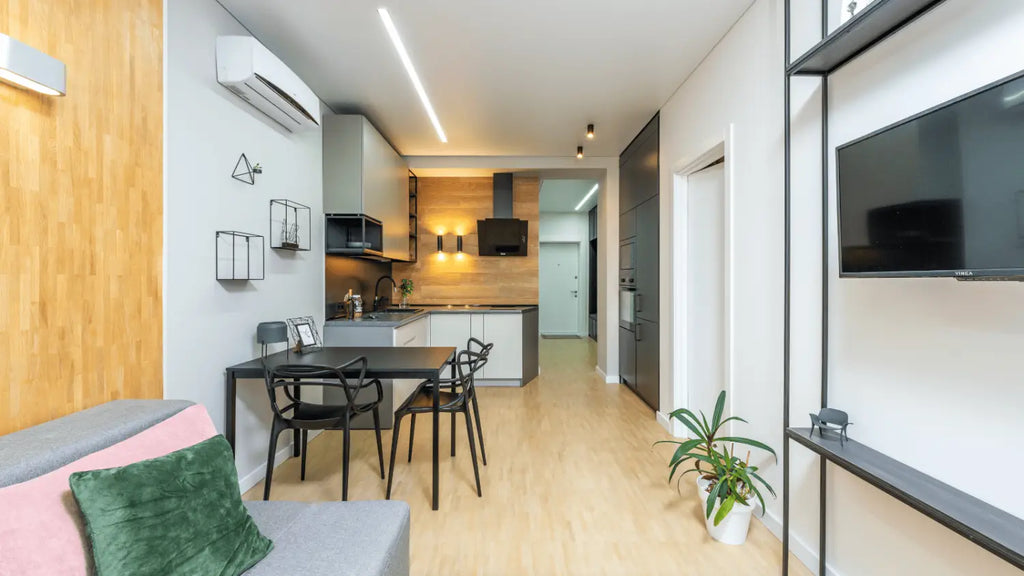
A kitchen lamp is a light fixture that sits on a surface and plugs into a simple outlet. It is placed on a sideboard, a serving table, a shelf or the counter of an open kitchen to complement the main lighting of the room. That main lighting is still provided by a ceiling light, pendant lights or spotlights, while the lamp adds a warm ambient light for meals and evenings.
Well chosen and well placed, a table lamp turns a corner of the kitchen into a welcoming space, with no renovation work or wiring, as long as you follow a few safety rules.
The importance of good lighting in the kitchen
Good lighting is essential to make the kitchen a functional and attractive space. Light plays a decisive role in how we perceive volumes, and it can turn an ordinary kitchen into a welcoming and pleasant place.
By choosing suitable light fixtures, you show off the room and create an atmosphere that suits both meal preparation and moments of togetherness, with family or friends. Well-distributed lighting also improves safety while you cook, since it removes shadowy areas.
Types of light fixtures for the kitchen
Kitchen lighting relies on several complementary sources, and each of our kitchen light fixtures has a precise role, from general light to ambient light.
Pendant lights for the kitchen
Kitchen pendant lights are ideal for lighting the table or the central island. They provide a direct, focused light, perfect for meals and food preparation, and their wide variety of styles makes it easy to find a model that matches your decor and is bright enough for everyday activities.
Models in black metal and wood are particularly fashionable and bring a touch of elegance, while a smoked glass pendant light gives a modern, sophisticated effect. Like any ceiling light fixture, it must be installed and connected by a qualified electrician.
Ceiling lights for the kitchen
Kitchen ceiling lights are an excellent solution for general lighting. Practical, they spread an even light, and they are particularly suitable for kitchens with low ceilings or spaces where a pendant light would not be practical.
LED ceiling lights in white or black metal are very popular for their contemporary look and the efficiency of their lighting, while a recessed model offers a discreet and elegant solution.
LED and recessed spotlights
LED spotlights and recessed spotlights are perfect for targeted, discreet lighting. In black metal or recessed into the ceiling, they highlight specific elements of the kitchen, such as the worktop or the cabinets, and contribute to a bright and pleasant atmosphere.
Adjustable spotlights offer great flexibility, because they direct the light exactly where you need it. On the ceiling for general lighting, or under the wall cabinets for task lighting, they are arranged so as to avoid annoying shadows and spread the light evenly.
Wall sconces
Kitchen wall sconces complement the general lighting and add a decorative note, in black metal as well as smoked glass. They light specific areas, for example the dining corner or wall shelves, with a soft, indirect light that creates a warm atmosphere.
Wall sconces with integrated LED use little power and last a long time, which makes them an economical choice in use. Installing them requires a connection to the wall, which should be entrusted to a qualified electrician.
Table lamps and floor lamps
Table lamps and floor lamps add supplementary light and create an intimate, welcoming dining corner. In black metal or smoked glass, a lamp placed on a sideboard or a console adds a decorative touch while providing useful lighting.
A kitchen floor lamp is rather used to light the darkest areas of the room. Both simply plug into a power outlet, and adjustable models let you adapt the lighting to the needs of the moment.
Where to place a lamp in the kitchen?
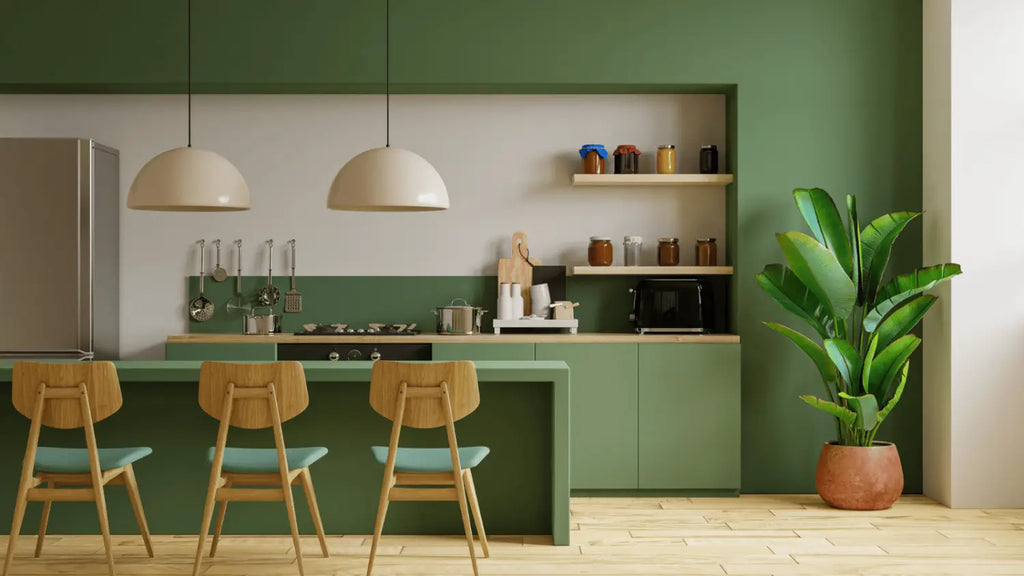
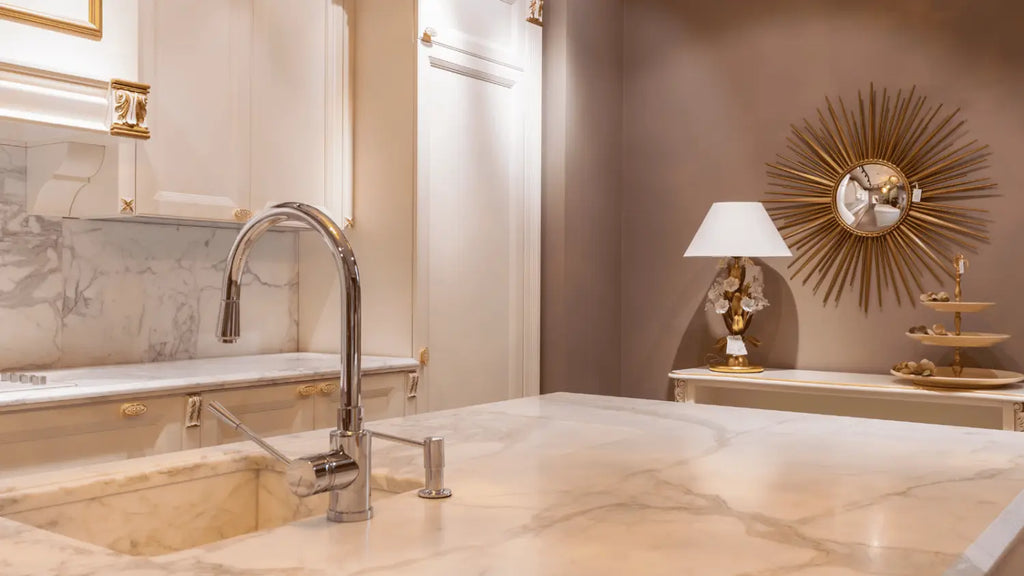
A table lamp finds its place on a sideboard, a serving table, a shelf or the counter of a kitchen open to the living room. It creates a welcoming bright corner there, ideal in the evening when the main lighting is off.
For your safety, always place it away from the sink, the cooktop and any source of water or heat, on a dry and stable surface. The cable must not hang near the worktop: where no outlet is close by, a rechargeable cordless lamp avoids this drawback.
Placing the other light fixtures well
The height and position of light fixtures are essential for successful lighting. Pendant lights are placed about 75 to 90 cm above the table or the central island, to avoid glare while still providing enough light, and spotlights and wall sconces are aimed at the areas to be highlighted.
A sufficient ceiling height is necessary for the light to spread well. Table lamps and floor lamps are then arranged strategically, where the general lighting needs to be complemented.
Lamp styles for the kitchen
Modern
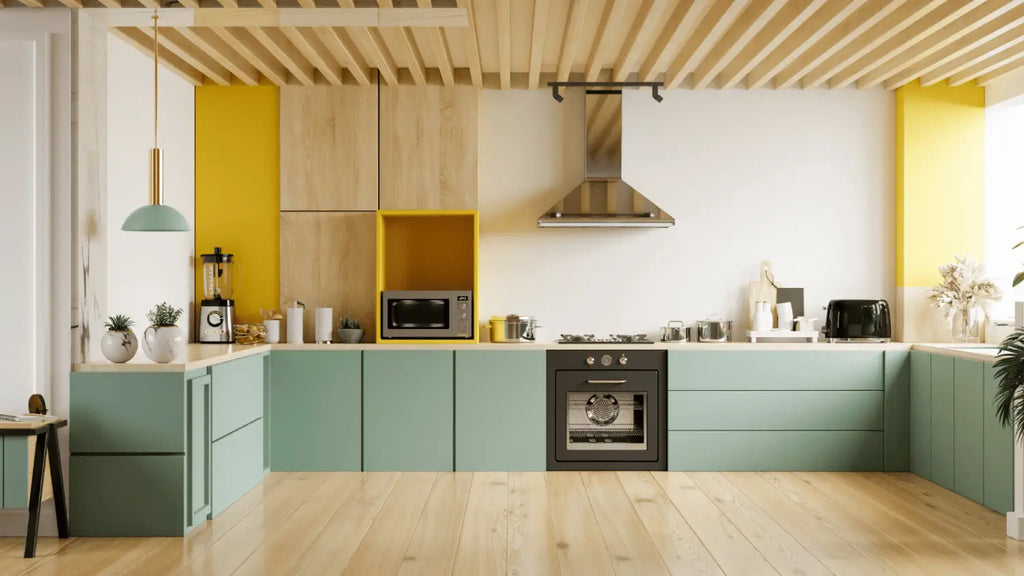
Clean lines, black or white metal, geometric shapes: a modern lamp suits a contemporary kitchen. It is recognizable by its up-to-date materials, such as aluminum or lacquered metal, and brings a note of sophistication to the room.
Black metal and amber glass are often combined to achieve an elegant, fashionable look. These light fixtures stand out in a contemporary kitchen, where they provide efficient lighting.
Industrial
Raw metal, wood and concrete, exposed bulb: the industrial style suits loft or workshop kitchens. An industrial lamp brings a sturdy, authentic touch to the decor, with a vintage feel.
Black metal and smoked glass are the most common materials in this style. Above an island, industrial pendant lights in black iron are often lined up in threes.
Scandinavian
Light wood, neutral colors and simple shapes create a warm atmosphere, ideal for family meals. A Scandinavian lamp stands out for its simplicity and elegance, and often uses natural materials such as wood.
This style can be found in light fixtures made of light wood fibers, sometimes enhanced by a gold metal detail. It suits perfectly a kitchen that combines practicality with aesthetics.
Elegant and decorative
Ribbed glass, gold finishes or mushroom shapes: a decorative lamp on a dining room sideboard brings a refined touch. Models with a classic inspiration, in champagne-colored or silver metal, give the kitchen charm and timeless elegance.
They will appeal to those who remain attached to a polished, traditional style. Light fixtures in white glass and gold lamps are particularly appreciated for their classic look.
How to choose your lamp?
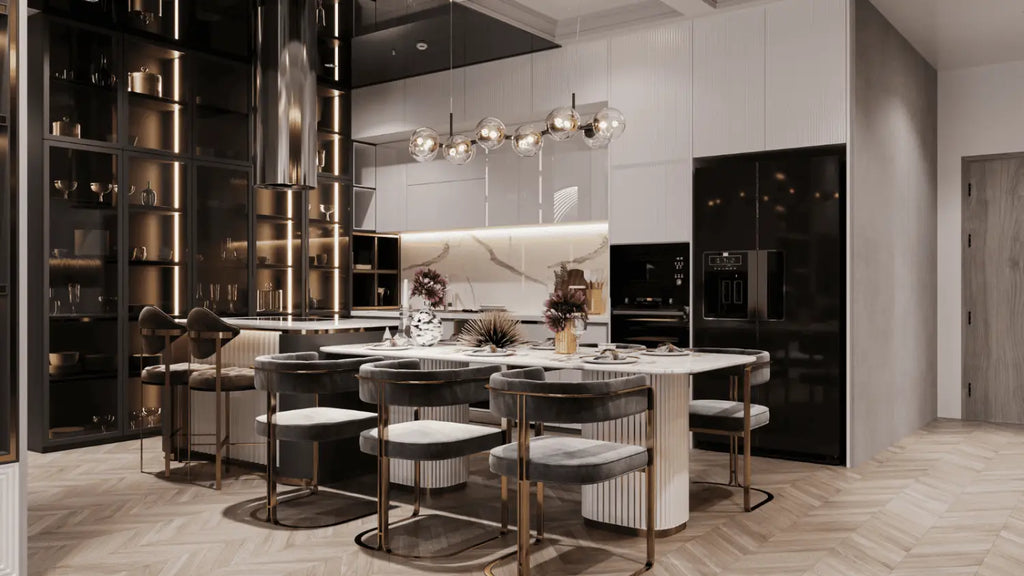
Choose a model that is easy to clean, in metal, ceramic or glass, like our glass lamps, and suited to the size of your furniture.
A warm light, between 2700 and 3000 K, creates a convivial atmosphere. Each Lustria product page details the dimensions, the materials and the compatible bulb type.
| Location | Recommended lamp | Tip |
|---|---|---|
| Sideboard or serving table | Decorative glass or ceramic lamp | Warm light, from 2700 to 3000 K |
| Open kitchen counter | Compact lamp with a stable base | Away from the sink and the cooktop |
| Dining corner | Lamp with adjustable intensity | "Dimmable" LED bulb on a dimmer |
Choosing the right light intensity
Light intensity is decisive for achieving a pleasant and functional atmosphere. Light that is too strong dazzles, while light that is too weak makes the space dark and unwelcoming: it is therefore better to choose lamps with adjustable intensity, to adapt them to different occasions.
Dimmers are very useful for adjusting the lighting to the desired mood, as on our dimmable lamps, provided that the LED bulb is clearly marked "dimmable". A well-balanced intensity creates a warm atmosphere while keeping good visibility for preparing meals.
Creating a pleasant atmosphere
Lamps are also used to create a welcoming atmosphere. Fabric shades, LEDs with adjustable intensity and warm tones all contribute, and a light fixture is chosen for its function as much as for its ability to beautify the room. Behind a fabric shade, use only an LED bulb, which gives off little heat.
An amber glass or gold metal lamp adds a note of warmth and sophistication, while smoked glass gives a soft and restful light. It thus extends the spirit of our dining room lamps.
Frequently asked questions about kitchen lamps
Can you put a table lamp in a kitchen?
Yes, as a complement to the main lighting, provided you place it on a dry, stable surface, away from the sink, the cooktop and any source of heat or water.
It belongs on a sideboard, a serving table or a shelf, never at the edge of the worktop, and its cable must not cross a walkway.
Where to place a lamp in an open kitchen?
On a sideboard, a serving table or the counter that separates the kitchen from the living room. It creates a gentle transition between the two spaces.
Lit on its own in the evening, it draws the eye toward the dining corner or the living room. Choose a stable base that is hard to knock over when passing by.
What color temperature should you choose?
A warm light, between 2700 and 3000 K, for a convivial atmosphere during meals: it is the right choice for a table lamp.
For general lighting and work areas, the ideal temperature is rather between 3000 and 4000 K, a warm to neutral white that offers good visual comfort for cooking. Beyond that, the light can seem cold and impersonal.
Which materials should you favor?
Metal, glass and ceramic are easy to clean, which is practical in a room where grease and steam can settle.
Their smooth surfaces only need a wipe with a cloth, whereas a fabric shade retains more deposits and odors.
How do you maintain a lamp in the kitchen?
Dust it regularly and clean it with a slightly damp cloth and a mild product, always with the lamp unplugged and cooled down.
In a kitchen, a greasy film eventually settles on the base and on the shade: regular cleaning prevents it from becoming ingrained. Never wet the lamp holder or the cable.
What lamp style suits a modern kitchen?
A model with clean lines, in black or white metal, or a geometric shape that matches the cabinet fronts and the worktop.
Pick up a material already present in the room, such as the matte black of the faucet or the stainless steel of the appliances.
What type of lighting and which bulb should you choose for a kitchen?
LED is now the best choice, for general lighting as well as for the bulb of a kitchen lamp: it uses little power, lasts a long time and gives an even, high-quality light.
Classic filament bulbs were withdrawn from sale between 2009 and 2012, and fluorescent tubes are gradually giving way to it. LED comes in several intensities and color temperatures, to meet every need.
What luminous power should you plan for a kitchen?
It depends on the surface area of the room: 3000 to 4000 lumens are generally recommended for the general lighting of a kitchen.
For supplementary lighting, and especially for work areas, allow about 400 to 500 lumens per square meter. An ambient table lamp needs much less.
How do you install lighting under kitchen cabinets?
By first choosing the type of light fixture, then measuring the space available under the wall cabinets before fixing the light strips or spotlights in place. Since most halogen models have been withdrawn from sale, people now turn to LED.
The electrical connection follows the manufacturer's instructions and is entrusted to a qualified electrician. Remember to test the lighting before finishing the installation.
How do you reduce glare in a kitchen?
By using shades, choosing bulbs with a lower color temperature and placing the light fixtures so that the light never hits the eyes directly.
Indirect or diffused lighting also helps limit glare, as does a table lamp fitted with a shade or an opal glass globe.
What are the current trends in kitchen lighting?
Current trends favor LED light fixtures, light strips under wall cabinets, geometric pendant lights and lighting built into the furniture.
These modern solutions combine practicality with aesthetics, for kitchens that are both functional and elegant, to which a table lamp adds its decorative touch.