





Incandescent light fixtures: rediscovering the light of yesteryear with LED filament bulbs
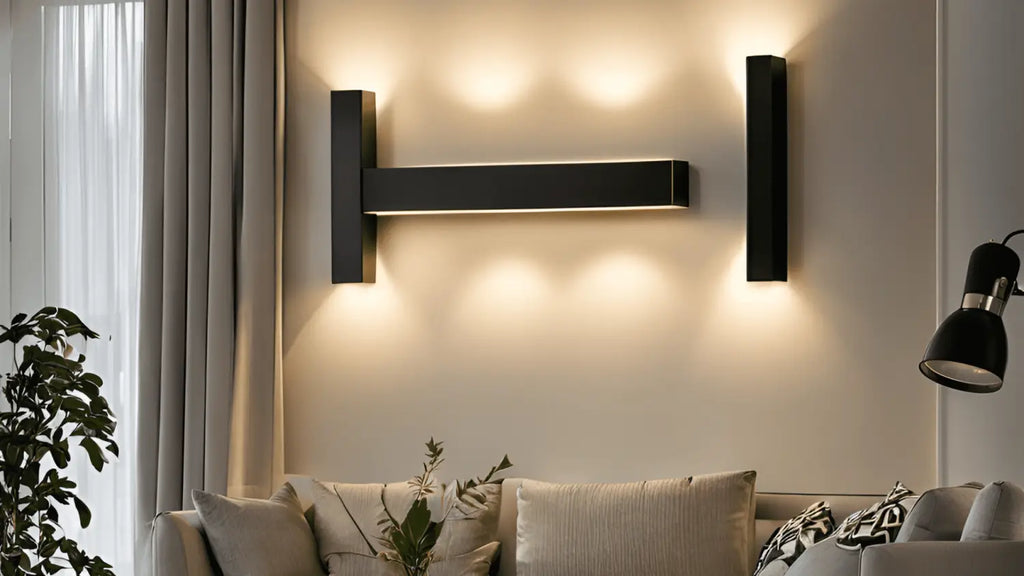
Key takeaways:
- An incandescent light fixture is a pendant light or ceiling light with an exposed lamp holder or clear glass, designed to show off a filament bulb and its golden light.
- Incandescent bulbs were withdrawn from sale between 2009 and 2012: today this look is achieved with an LED filament bulb, in very warm white.
- Check the base and the maximum wattage on the product page, and leave the installation and connection of a ceiling light fixture to a qualified electrician.
An incandescent light fixture is a ceiling light fixture, pendant light or ceiling light, whose exposed lamp holder or clear glass reveals a filament bulb and its golden light. Originally, this tungsten filament, with current passing through it, heated until it became incandescent and gave off light: it was the first reliable light source in homes, in the early twentieth century.
Since replaced by LED, this light is still sought after for its warmth and for the welcoming ambiance it creates in a living room or a bedroom. For classic ambient lighting, it remains a safe choice, and the light fixtures offered by Lustria make it the centerpiece of the decor, with an LED filament bulb.
The essential role of light born from incandescence
The main strength of incandescence lies in its soft and pleasant light. Unlike other sources, it is perceived as more natural and warmer, which explains why it is still so popular in homes, and everywhere that ambiance matters as much as brightness.
This golden shade is particularly suited to the living room and the bedroom, where it creates a comfortable and welcoming atmosphere. LED filament bulbs reproduce it faithfully, across all of our warm light fixtures.
Incandescent bulbs: what has changed
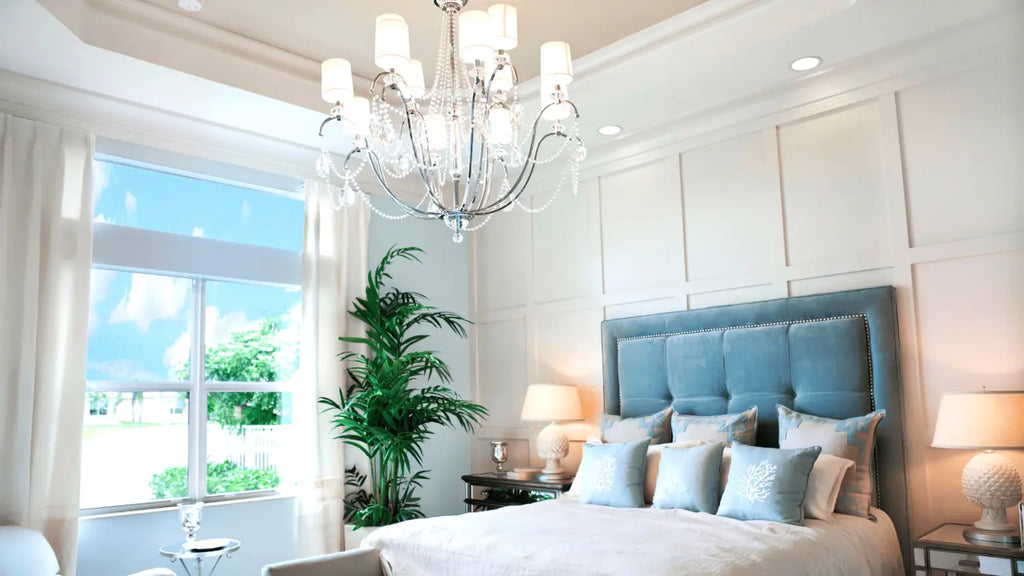
The structure of an incandescent bulb
An incandescent bulb is made up of three parts: the filament, the glass envelope and the base. The tungsten filament heats up as current passes through it, until it becomes incandescent, while the envelope, made of ordinary glass or quartz glass depending on the model, protects it and lets the light spread through the room.
The base, most often an E27 or an E14, secures the bulb to the light fixture and ensures a stable contact with the power supply. The noble gas sealed inside the bulb keeps the filament from degrading too quickly. This simple and efficient construction made the filament bulb indispensable in every home, for many years.
How it works and how energy is converted into light
It works on the Joule effect, the phenomenon that produces heat, then light, when an electric current passes through a metal wire. The filament temperature then exceeds 2000 °C, which makes it incandescent and causes it to emit visible light.
This process is not very efficient, however, because most of the electricity is dissipated as heat instead of being turned into light. This is the main drawback of the incandescent bulb compared with LED, which provides the same luminous flux for much lower consumption.
The replacement of incandescent bulbs
Because of their high consumption and limited lifespan, incandescent bulbs were withdrawn from sale between 2009 and 2012. Halogen bulbs, based on the same principle with a halogen gas that spares the filament, took over for a time, before being withdrawn in turn on September 1, 2018 for the most part.
Current practice therefore favors LED, which is more durable and more efficient, while the charm of the old carbon filament lamps lives on in decorative lighting, thanks to LED filament bulbs. Often called "Edison" or "vintage" bulbs, they keep the visible filament and a very warm light, from 2200 to 2700 K, which our LED light fixtures show off.
Why switch to more efficient alternatives?
LED bulbs offer much better energy efficiency and last far longer than conventional incandescent bulbs. They reduce electricity consumption while maintaining quality lighting, with much less heat given off.
They thus meet today's energy-saving requirements, which explains their growing success in homes and businesses alike. The light fixture itself does not change: an E27 lamp holder takes an LED filament bulb just as it took a conventional bulb in the past.
The most common bases
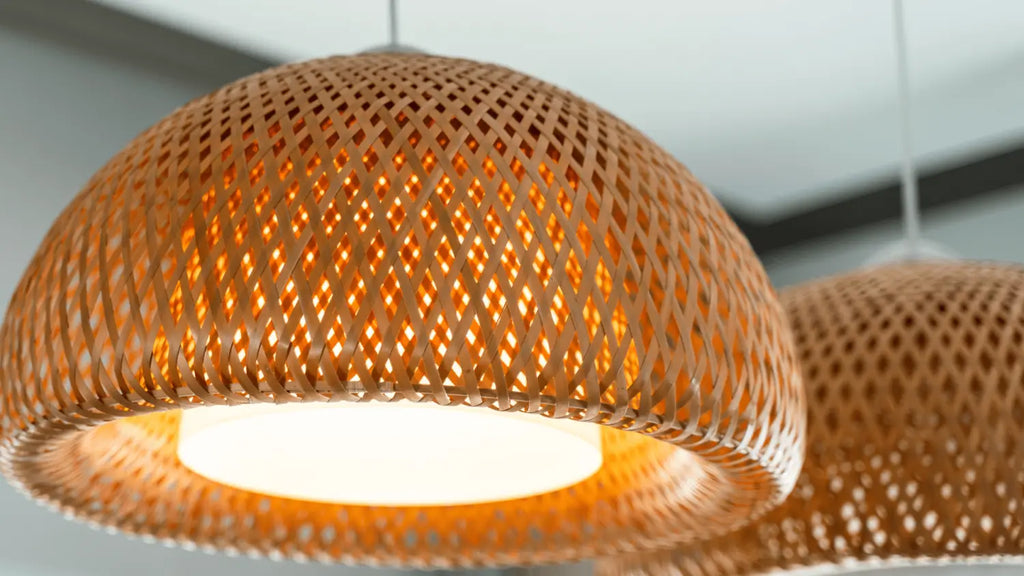
The most widespread bases are the E27 and the E14, which differ in size and in the wattage they accept. The E27 base, a large screw base, fits most pendant lights, ceiling lights and floor lamps, whereas the E14 base, also a screw base but smaller, is found mostly on multi-arm chandeliers and on our filament wall sconces.
The GU10 and G9 bases are used rather for spotlights and small compact light fixtures. All provide a stable and safe connection, provided the intended format is respected: the base and the maximum wattage accepted are given on each product page.
Choosing the right LED filament bulb
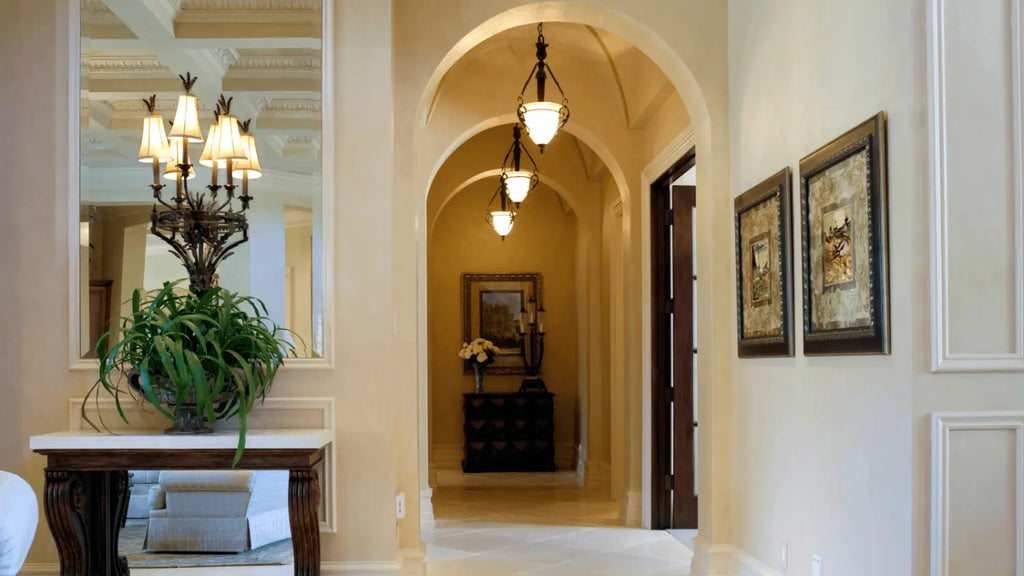
To get the look of an old 60 W bulb, choose an LED filament bulb of around 800 lumens, in very warm white: a few watts are enough. Globe, pear or tube shapes show off pendant lights with an exposed lamp holder.
A dimmable version lets you adjust the intensity, provided the dimmer is LED-compatible and the bulb is marked "dimmable", as with our dimmable light fixtures. Under a paper or fabric shade, use only LED bulbs, which give off little heat. The table below summarizes the most common pairings.
| Room | Recommended light fixture | LED filament bulb |
|---|---|---|
| Dining room | Pendant light above the table | Globe, 2200 to 2700 K, dimmable |
| Kitchen | Pendant lights lined up above the island | Pear, 2700 to 3000 K |
| Living room, bedroom | Central pendant light or ceiling light | Very warm white, dimmable |
| Hallway | Ceiling light with clear glass | Pear or tube, 2700 K |
The market and trends in incandescent light fixtures
Despite the switch to LED, the incandescent style and vintage-looking bulbs remain in high demand, particularly in industrial or retro-inspired decors, where they are used to create warm and intimate lighting. A filament bulb pendant light above a table is often enough to set the tone.
Lustria offers a wide choice of incandescent light fixtures suited to every room and every need, from the most classic lines to the exposed filament ceiling light, which meet today's expectations of efficiency and design. Outdoors, however, only a model designed for that use is suitable, with its IP rating given on the product page.
Vintage light fixtures: an increasingly popular choice
Vintage filament light fixtures appeal through their distinctive design and their ability to create a warm and authentic atmosphere. They are found mostly as pendant lights and decorative ceiling lights, whose light recalls the era of carbon filament lamps, as with our vintage light fixtures.
They attract especially those who want to give their interior a focal point: black metal structure, glass globe, gold or brass finish, each model stands out even when switched off. In a workshop-style decor, industrial light fixtures play the same tune, with their raw lines and their bare lamp holders.
The incandescent light fixture in the connected home and home automation
The incandescent style also finds its place in the connected home, thanks to dimming systems that adjust the light according to the time of day or the activity. A dimmable LED filament bulb, with an E27 or E14 base, fits many light fixtures and works with these intensity dimmers, for much lower consumption than the old bulbs.
Some connected bulbs and dimmers can be controlled remotely, from a mobile app, which makes it possible to integrate the light fixture into a home automation setup and to adjust the intensity to the desired ambiance, without losing any of the traditional character of this light. The installation of a wall dimmer should be left to a qualified electrician.
Changing a bulb safely
Switch off the light fixture, let the bulb cool, then replace it with a bulb with an identical base, never exceeding the maximum wattage indicated. On a ceiling light fixture, stand on a stable stepladder and screw in the new bulb without forcing it.
The installation and connection of a pendant light or a ceiling light, like any work on the wiring, should on the other hand be left to a qualified electrician. In a bathroom, the NF C 15-100 standard defines safety zones and requires an IP44 rating at a minimum, to be checked on our bathroom light fixtures.
Frequently asked questions about incandescent light fixtures
Can you still buy incandescent bulbs?
No, conventional incandescent bulbs for household lighting are no longer placed on the market in the European Union: they were withdrawn from sale between 2009 and 2012.
LED filament bulbs recreate their look and the warmth of their light, on the same bases.
What type of energy-saving bulb should replace an incandescent bulb?
An LED bulb, which uses far less electricity for equivalent light, and lasts significantly longer, which makes it more economical over time.
Compact fluorescent bulbs, also less power-hungry and similar in format to the conventional bulb, bridged the transition before giving way to LED.
Does an LED filament bulb get as hot as an incandescent bulb?
No, it gets much less hot, and uses significantly less electricity for equivalent brightness.
The old bulb turned most of the electricity into heat: it could raise the temperature of a room that was closed or poorly ventilated, and increase the cost of air conditioning. With an LED, which is more economical over time, this effect almost entirely disappears.
Which color temperature should I choose for a vintage look?
Between 2200 and 2700 K for a golden light, typical of the incandescent style, and from 2700 to 3000 K if you want a little more clarity.
The first range suits the living room or the bedroom, the second a kitchen or an office, where you need to see well.
How does an incandescent bulb work and what are its components?
It consists of a tungsten filament, which the current heats until it becomes incandescent, a glass envelope that protects it, and a base that connects it to the power supply.
The envelope contains a noble gas, such as argon, which prevents the filament from oxidizing quickly. Under the Joule effect, the filament exceeds 2000 °C: this intense heat is necessary for the light, but accounts for most of the energy lost.
Why did an incandescent bulb last such a short time?
Because it worked by means of a tungsten filament brought to a very high temperature, which wore it out quickly.
This filament wear eventually caused it to break. LED bulbs, with no white-hot filament, last much longer: their lifespan is stated on the packaging.
What were the advantages of an incandescent bulb compared with an LED bulb?
A soft and natural light, often perceived as warmer and more pleasant indoors, and a very simple design, with no electronic circuit.
It lit instantly and was unaffected by the ambient temperature. Even though it used more energy, some people remain attached to its classic glow, which LED filament bulbs reproduce today.
What is the difference between an incandescent bulb and a halogen bulb?
The halogen bulb was an improved version of the incandescent bulb: the same heated tungsten filament, but in a halogen gas that extended its lifespan and improved its efficiency.
Its light was more intense and whiter, for slightly lower consumption. Most halogen bulbs were withdrawn from sale on September 1, 2018: turn to LED.
How do I choose the bulb wattage for suitable lighting?
According to the size of the room and the ambiance you want. In the past, a 40 to 60 W bulb gave a soft light in a living room or bedroom, and a 75 to 100 W bulb gave brighter lighting in a kitchen or office.
With an LED, think in terms of lumens: about 470 for the equivalent of a 40 W, 800 for a 60 W and 1050 for a 75 W.
Can an incandescent light fixture be used in a professional or industrial space?
Yes, for decorative lighting or a warm light, but not in places that require high light intensity.
In a workshop or a warehouse, powerful LED sources are preferred, being more efficient and more durable. The exposed filament light fixture keeps its place in a restaurant dining room or a shop, among our professional light fixtures.
Where can I buy an incandescent-style light fixture?
At Lustria, where each product page states the base, the maximum bulb wattage, the dimensions and the materials of the light fixture. The price is shown on each product page.
The collection mostly brings together pendant lights and ceiling lights. To complete their lighting, a filament table lamp simply plugs into an outlet, on a bedside table or a side piece of furniture. Next to the sofa, a filament floor lamp plays the same role.