





Dimmable pendant light: set the mood as you like

Key takeaways:
- A dimmable pendant light is a light fixture hung from the ceiling whose light intensity can be adjusted, using a wall dimmer, a touch control or a remote control, depending on the model.
- The most useful selection criterion is the dimming method: integrated LED with its own system, or a replaceable bulb marked "dimmable" and paired with an LED-compatible dimmer.
- Installation and connection should be entrusted to a qualified electrician, and you should allow roughly 75 to 90 cm between the bottom of the pendant light and the tabletop.
A dimmable pendant light is a light fixture hung from the ceiling by a cable, a rod or a chain, whose light intensity can be adjusted as you wish using a dimmer or a touch control. The term "dimmable" simply means that the light of the LED bulb can vary, bright for a meal or for work, subdued for an evening.
This flexibility lets you create several atmospheres in the living room, the kitchen or the bedroom, and it suits every style, from the most classic to the most contemporary. Among our pendant lights, the dimming models give a pleasant light, while using less electricity whenever you lower the intensity.
What is a dimmable LED light fixture?
A dimmable LED light fixture relies on electronics able to modulate the current that feeds the light source, and therefore to vary its output. Unlike a fixed model, it lets you adjust the brightness to the activity of the moment or the amount of light you want.
There are several types of dimmers: some replace the wall switch, others are built into the light fixture, and others are operated with a remote control. Depending on the product pages, our LED pendant lights come with an integrated LED or a replaceable bulb, for adjustable lighting that brings real visual comfort without using more than necessary.
How does dimmable technology work?
The principle is to reduce or increase the luminous flux by acting on the electrical supply of the lamp. The dimmer acts as an electronic dimming controller, which adjusts the intensity as needed. Some installations rely on the DALI protocol, a digital control that makes it easier to manage the light in several rooms.
Other light fixtures include an internal power supply, which ensures compatibility with variable-intensity LEDs. Dimming is not limited to pendant lights, either: it is also found on a dimmable ceiling light, on a spotlight or on a table lamp. Besides being energy efficient, this system offers a subdued effect, ideal for relaxing evenings.
Identifying a dimmable bulb before buying
Before buying a bulb, read its packaging, which most often states whether it works with a dimmer or only with a standard switch. A dimmable LED bulb carries the "dimmable" marking, sometimes accompanied by a pictogram showing a variation of light or a circular arrow, which avoids compatibility mistakes.
If a bulb flickers or does not switch off properly, for example, it is most often an electrical compatibility problem. To choose safely, refer to the product page of each pendant light, which specifies the base, the maximum power accepted and the intended dimming method.
Styles and materials
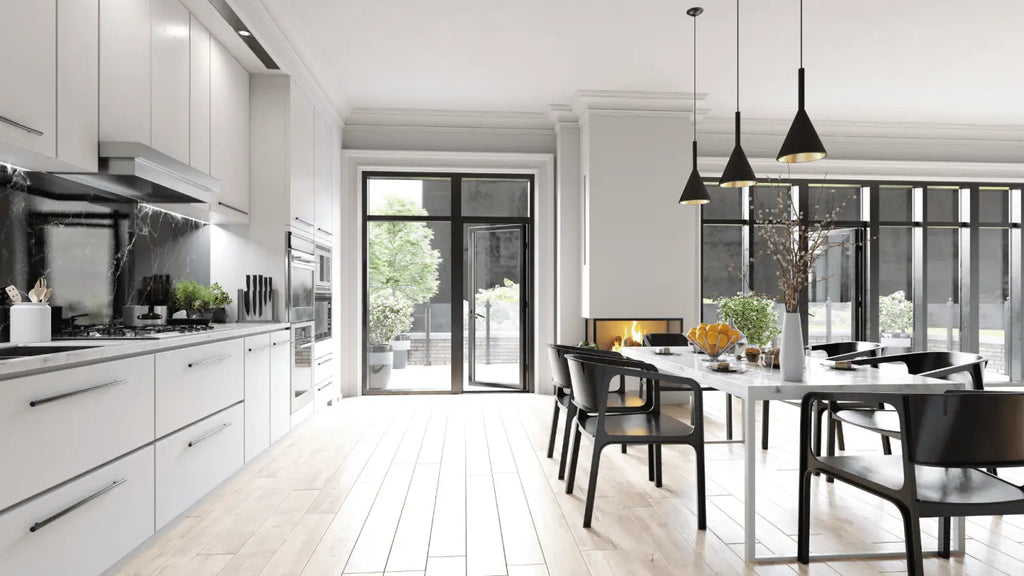
Glass, metal, fabric or rattan, with an integrated LED or a replaceable bulb: the choice of material influences how the light is diffused, direct or subdued. The globe of our glass pendant lights lets through a clear light, which dimming softens in the evening, while a shade in black or gold metal concentrates the beam toward the table.
Natural fibers (rattan, bamboo or woven straw) filter the light and draw gentle patterns on the walls as soon as the intensity is lowered. In terms of style, the collection mainly brings together modern lines, Art Deco models with golden reflections and Scandinavian pendant lights, where light wood echoes white. A fabric shade, for its part, takes only an LED bulb, which gives off little heat.
Choosing your pendant light well
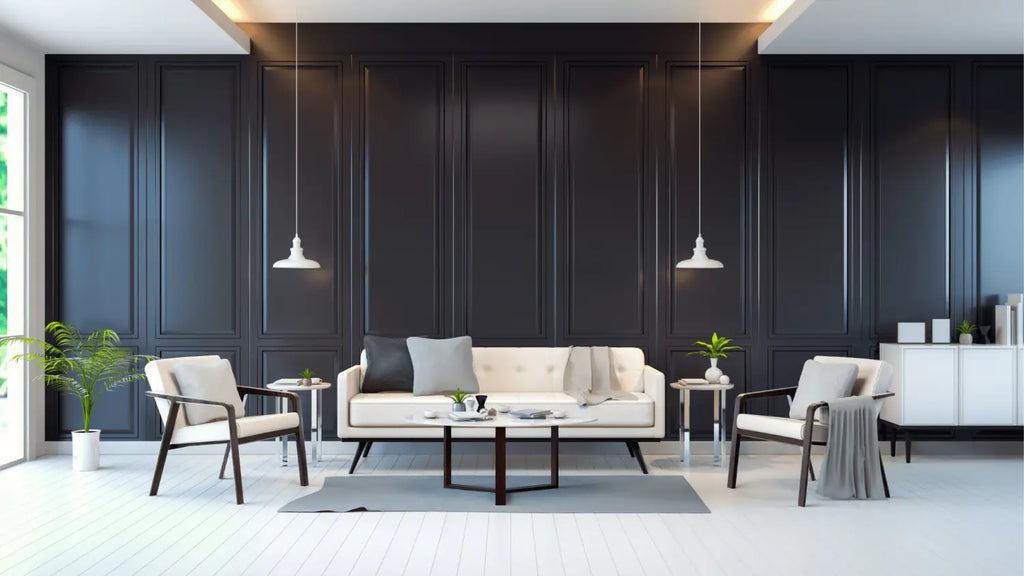
Finding the right type of lighting for each room
To choose well, first define the type of lighting that suits each space. Above the table, a dining room pendant light set to a warm white creates a welcoming atmosphere; allow roughly 75 to 90 cm between the bottom of the fixture and the tabletop, and at least 2.10 m under the pendant light in a walkway.
Above a worktop, a kitchen pendant light gives a brighter and more functional light, which you lower once the meal is ready. In the evening, a table lamp or a floor lamp with subdued light complements the pendant light for moments of relaxation, as the table below summarizes.
| Room | Recommended setting | Installation guide |
|---|---|---|
| Dining room | Bright light during the meal, subdued afterward | 75 to 90 cm above the table |
| Living room | Warm white, low intensity in the evening | At least 2.10 m in a walkway |
| Kitchen, office | Neutral white, full intensity for working | Above the worktop |
| Bedroom | Soft light, raised gradually in the morning | In the center of the room |
Intensity variation: the role of the dimmer
The dimmer is the heart of any dimmable lighting: it adjusts the current and lets you modulate the brightness to your liking. Some models have a touch control or a remote control, to adjust the light with a simple gesture, and pendant lights with an integrated LED generally have their own dimming method, specified on the product page.
With a replaceable bulb, choose an LED marked "dimmable" and an LED-compatible dimmer, to avoid flickering and buzzing. Also check that the load accepted by the dimmer matches the power of the bulbs: a powerful pendant light sometimes requires a suitable power supply, and this precaution prevents failures.
The advantages of a dimmable light fixture
Dimmable light fixtures combine several advantages: energy savings, better visual comfort, less strain on the bulbs and a personalized atmosphere. This type of lighting helps to reduce consumption while giving a pleasant light, different depending on the time of day.
Thanks to dimming, you lower the brightness for a subdued atmosphere, or raise it for a specific activity, such as reading or preparing a meal. At Lustria, each model is selected to combine light quality, design and durability.
A day with a dimmable light fixture
From morning to night, the same dimmable pendant light changes role three times, and this is what best illustrates the value of dimming.
Morning: a soft light to start well
In the morning, a soft and warm light accompanies a natural and gradual wake-up. A dimming bedroom pendant light, set to warm white, creates a peaceful atmosphere, and you raise the intensity at your own pace, according to the natural light already entering the room.
LED technology lights efficiently while remaining energy efficient. By modulating the power with the dimmer, you start the day in a pleasant and balanced atmosphere, without glare.
Afternoon: maximum brightness for concentration
In the afternoon, in an office or a kitchen, adjustable lighting helps you stay focused. Pushed to full intensity, an office pendant light provides a generous luminous flux without dazzling, which you adjust with the dimmer or the remote control, depending on the model. A neutral color temperature, around 4000 K, gives a natural rendering, ideal for precision tasks.
Dimming does not exempt you from safety rules. In a bathroom, the NF C 15-100 standard defines safety zones and requires an IP44 rating at minimum: for our bathroom pendant lights, the rating can be read on the product page. Outdoors, even under cover, only a model designed for outdoor use is suitable.
Evening: a subdued atmosphere to unwind
It is in the evening that the dimmable pendant light makes the most sense. By lowering the intensity, you get a cozy effect, perfect for relaxing or for a gentle dinner, and a dimmable lamp placed near the sofa extends this low light into the living room.
Depending on the models, you switch the pendant light on or off remotely, you go from warm white to cool white, or you simply play on the amount of light according to your mood. It is a simple way to make the home a place of comfort.
Installation and maintenance
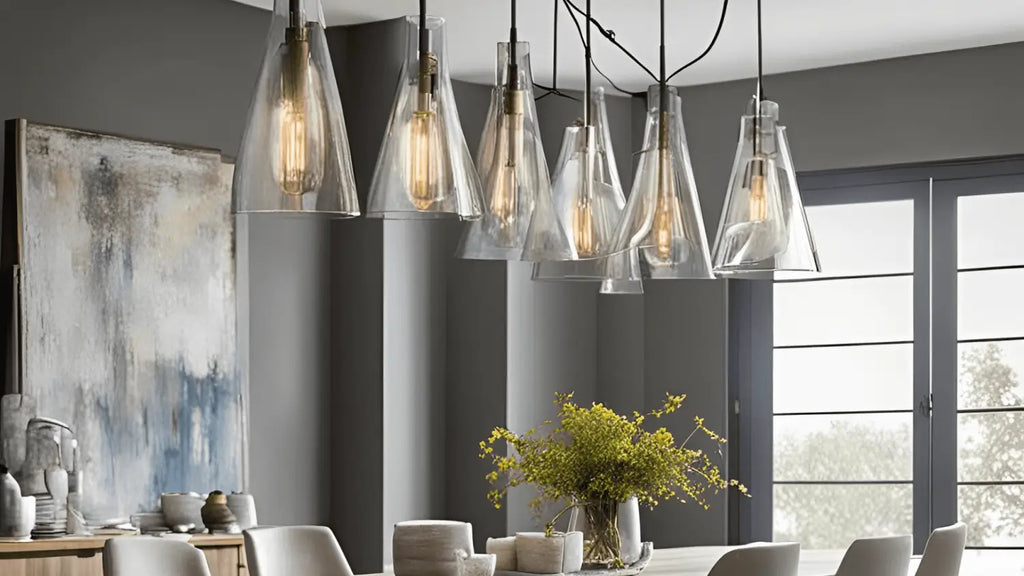
How do you know if your installation is compatible?
Before having a dimmable LED pendant light installed, you need to check the compatibility of the electrical installation. Some dimmers work only with a specific base or within the limit of a maximum load: a lamp that is too powerful can exceed the capacity of the dimmer and cause power cuts.
To avoid this, consult the technical information on the product page, then entrust the installation to a qualified electrician, who checks the existing dimmer, secures the pendant light and carries out the connection. This is the condition for reliable lighting over time.
Good maintenance practices
Regular maintenance extends the life of a dimmable pendant light. Dust it with a soft cloth, with the fixture switched off and cooled down, without abrasive products, and keep it away from water splashes: in a bathroom, only a model with a suitable IP rating belongs there.
If the light varies abnormally, lower the intensity so as not to overload the system, then have the connections and the power supply checked by a qualified electrician. A well-maintained installation keeps a steady operation and all of its lighting efficiency.
Upcoming innovations in dimming
The world of lighting is evolving fast, with smart technologies that are ever more advanced. The latest-generation dimmable LED light fixtures work with light sensors or voice controls, and some adjust their intensity on their own according to natural light or presence in the room.
These functions remain specific to certain models, and the product page indicates how the pendant light is controlled. The goal is always to reconcile energy savings, visual comfort and modern design, as our dimmable wall sconces also do.
Why choose a dimmable pendant light?
Choosing a dimmable pendant light means opting for lighting that is practical, attractive and energy efficient at once. This type of LED light fixture helps create a tailor-made atmosphere, reduce energy consumption and put less strain on the bulbs, since you adjust the brightness to your needs and your wishes.
Lustria, the reference for online lighting, offers a wide range of models, each of whose product pages states the features and the price. To complete your pendant light, consider a dimmable floor lamp, which simply plugs into an outlet, and let the light support your everyday comfort.
Frequently asked questions about dimmable pendant lights
Dimmer, bulb, installation, settings: here are the answers to the questions that come up most often.
What exactly does "dimmable" mean for a light fixture or a bulb?
A dimmable light fixture or bulb is one whose light intensity can be varied according to your wishes and needs. With a dimmer, you adjust the power of the light, from the softest to the brightest.
This adjustable system tunes the lighting of every room in the house, with reduced consumption and better visual comfort.
How does a dimmable LED pendant light work and what is the dimmer for?
A dimmable LED pendant light works by varying the current that feeds the bulb, and the dimmer is used to modulate the brightness without altering the quality of the light.
It can be built into the switch, connected to a remote control or, on some models, operated from a mobile app. You thus adapt the power to each activity: reading, cooking or resting.
Does a dimmable bulb work without a dimmer or a special switch?
Yes, a dimmable bulb switches on normally on a standard switch, but you do not benefit from dimming: without a dimmer, the lighting stays fixed.
To take advantage of this technology, have a qualified electrician install a compatible dimmer matching the power and the type of the bulb. Operation is then stable and the light pleasant.
How do you choose the ideal power and brightness for a dimmable LED pendant light?
Take into account the size of the room and the atmosphere you want: a large room, such as the living room, requires a higher luminous flux, expressed in lumens, whereas a bedroom or a dining room is happy with a softer light.
Prefer a warm white for a cozy atmosphere and a neutral white for a workspace, and check the compatibility of the dimmer, so as to lose nothing in efficiency.
How do you know if an LED bulb is compatible with an existing dimmer?
Simply read the packaging or the product sheet: a compatible bulb carries the "dimmable" marking, often accompanied by a specific pictogram.
Also check the load accepted by the dimmer and the power of the bulb used. If in doubt, prefer a dimmer designed for LEDs, a guarantee of smooth dimming without flickering.
What are the advantages of dimmable lighting for the home?
Dimmable lighting makes it possible to modulate the brightness according to needs, to use less energy and to spare the bulbs.
It also helps create varied atmospheres, from an intense light for active moments to a subdued light for relaxing evenings. You gain in visual comfort, with a modern design suited to every space.
Which color temperature should you choose for a warm and pleasant atmosphere?
Choose a warm white, between 2700 and 3000 kelvins: this light brings a feeling of comfort and conviviality, perfect for the living room, the bedroom or the dining room, as on our warm light pendant lights.
For a more neutral lighting in the kitchen or the office, aim for around 4000 kelvins. You thus play on both the tint and the intensity depending on the moment.
How do you have a dimmable LED pendant light installed at home?
The installation and connection of a pendant light should be entrusted to a qualified electrician, who cuts the power, fixes the support to the ceiling and connects the wires according to the manufacturer's instructions.
If the light fixture requires a dimmer, the electrician checks its compatibility before connecting it. Once the installation is finished, you adjust the light with the dimmer or the remote control, depending on the model.
What should you do if your dimmable pendant light flickers or does not dim properly?
First check the compatibility between the bulb and the dimmer, the most frequent cause of a lamp that flickers, switches off by itself or responds poorly: the bulb must be truly dimmable, and the load of the dimmer must match the total power of the connected lamps.
An unsuitable dimmer or power supply sometimes causes these variations. Replacing it with a model designed for LEDs, carried out by a qualified electrician, generally solves the problem.
Why does variable-intensity lighting help reduce energy consumption?
Because it adapts the light output to each situation: by lowering the intensity, you use less electricity and put less strain on your LED bulbs.
This energy-saving solution suits every room, from the office to the living room. Besides lightening the energy bill, dimming improves visual comfort and makes the atmosphere more pleasant day to day.