





Everything you need to know about Japanese-inspired lamps
Key takeaways:
- A Japanese lamp is a light fixture with clean lines, inspired by traditional Japanese lanterns, whose paper or natural fiber shade filters and softens the light.
- Choose it according to the room and the piece of furniture that will hold it: a small pleated model on the nightstand, a lantern or a woven lamp on a piece of living room furniture.
- Fit it with a warm-light LED bulb, which gives off little heat, and dust it dry with the lamp unplugged, away from moisture and direct sunlight.
A Japanese lamp is a light fixture inspired by traditional Japanese lanterns, whose paper or natural fiber shade filters the light instead of projecting it. Much more than simple light sources, these table lamps capture the elegance and simplicity of Japanese decorative arts, where tradition meets modernity.
For centuries, these objects have served both to light homes and to bring a touch of serenity and beauty to the space that houses them. Here you will find their history, their different types and their uses, along with advice on choosing your lamp, caring for it and even making your own.
The origins of the style
Chōchin lanterns
Chōchin are among the most emblematic lanterns of Japan. Traditionally made of pleated paper stretched over thin strips of bamboo, they were originally portable lanterns that were easy to fold up.
Today they decorate the entrances of restaurants and homes, where their soft light creates a warm and welcoming atmosphere. Their silhouette remains the very model of the hanging decorative light fixture, whose principle is echoed in paper pendant lights.
Ishidōrō lanterns
Ishidōrō, or stone lanterns, are found in Japanese gardens and around temples. Carved from rock, most often granite, they last through the years and withstand bad weather.
They add a zen note to an outdoor space, especially in an Asian-inspired setting. They are garden objects, mentioned here for their place in Japanese culture and not as indoor lamps.
Andon lamps
Andon, made of washi paper stretched over a wooden frame, once lit the inside of Japanese homes, placed on the floor or on a piece of furniture. Their clean design and their subdued light make them a natural reference for creating a soothing atmosphere at home.
Their principle, a filtered and gentle light, can be found in many of today's light fixtures, from the bedside lamp to the decorative ceiling light. In its hanging version, such a light fixture must always be installed and connected by a qualified electrician.
Traditional materials and techniques
Washi paper is a traditional Japanese paper made from long plant fibers, known for its strength and its unique texture. It is used to make shades because it diffuses a soft and pleasant light, and what is commonly called rice paper appeals through the same delicacy, the one sought by fans of paper lamps.
Wood and bamboo usually make up the structure of Japanese lamps, to which they bring a natural and elegant note while remaining solid and durable. The combination of wood and paper is particularly appreciated for its simplicity and its zen look.
Finally, stone is the material of garden lanterns, valued for its solidity and rustic appearance. It blends into zen gardens, to which it brings an impression of serenity and, according to tradition, a spiritual dimension. The materials of each lamp in the shop are indicated on its product page.
The lamps in the collection
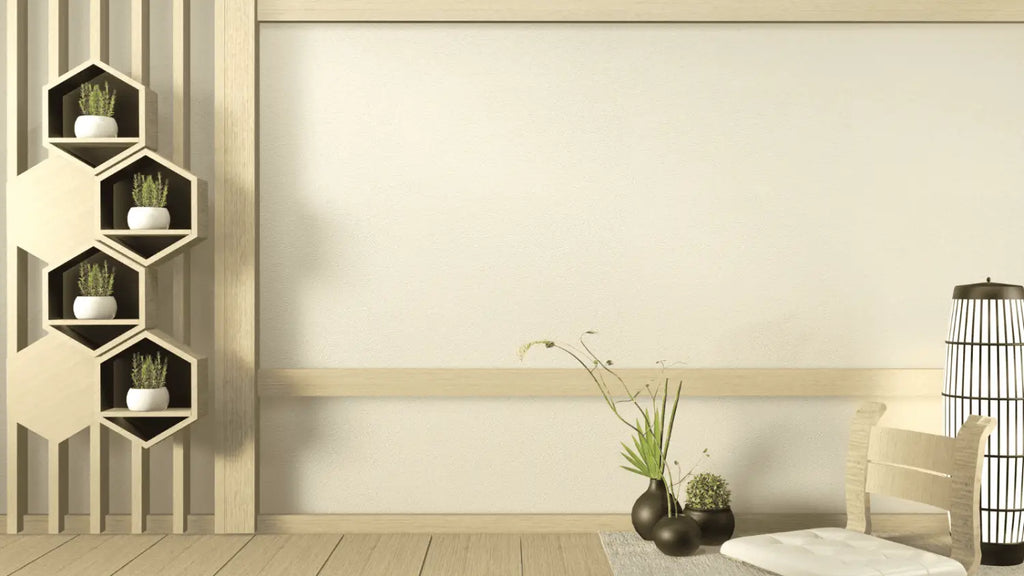
Our selection brings together table lamps inspired by this spirit: accordion-pleated lanterns, foldable lamps and woven lamps, in the vein of our rattan lamps. Their simple shapes and diffused light go perfectly with zen or Japandi decor.
All of them simply sit on a piece of furniture, and some models even work without a cable, like our cordless lamps. Rather than looking for a ranking of the best lamps, compare their dimensions and materials, detailed on each product page, so you can choose with full knowledge.
Bringing a Japanese lamp into your decor
In the living room
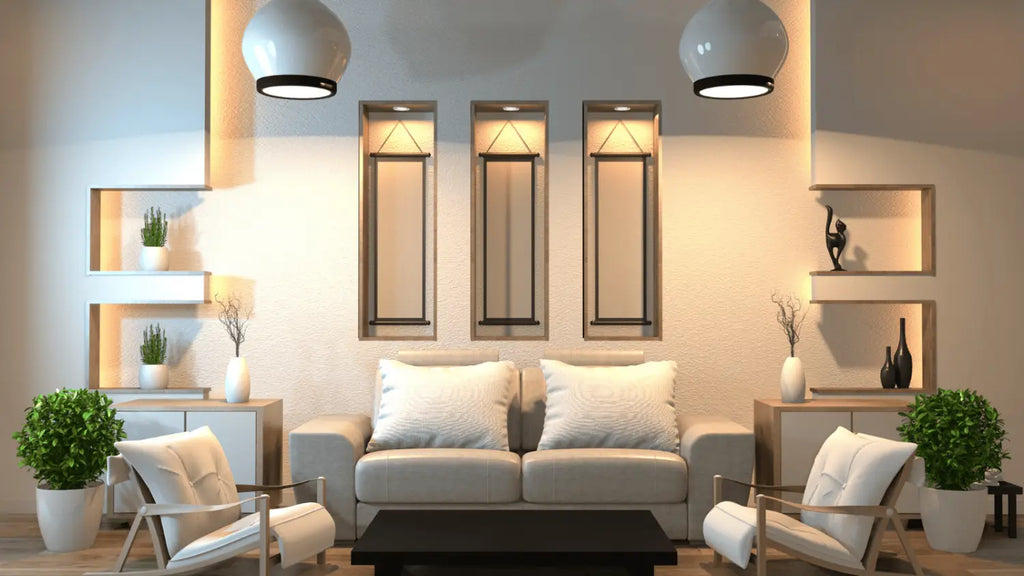
Japanese light fixtures can turn the living room into a true haven of peace. Place them near reading areas or resting areas, on a coffee table or a shelf, to create a soothing corner whose diffused light accompanies relaxing evenings in a zen atmosphere.
A paper floor lamp or a Japanese-style wall sconce readily extends this decor upward. The first plugs into an outlet, like a table lamp, while the second must be installed by a qualified electrician.
In the bedroom
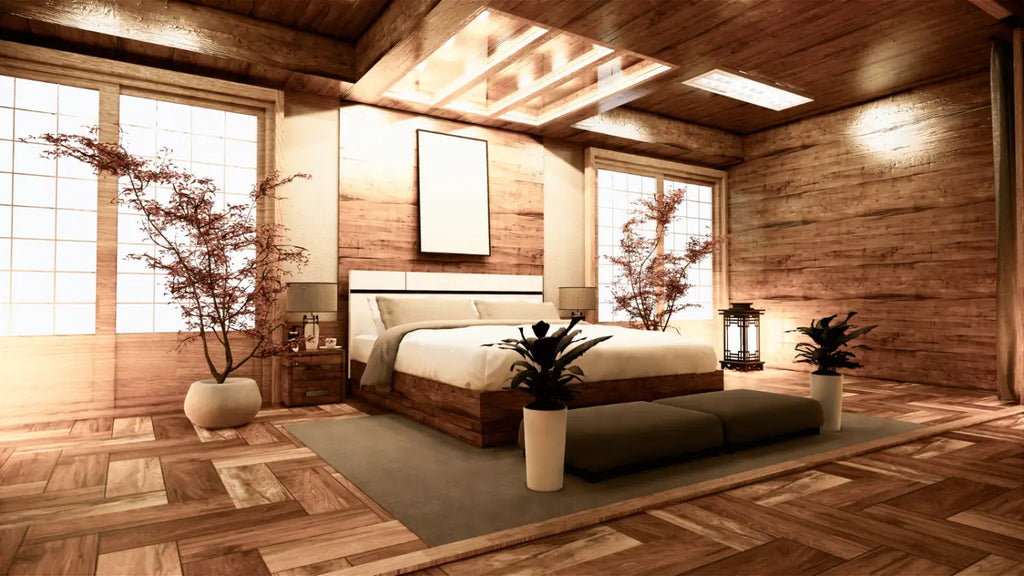
On the nightstand, a pleated or woven lamp gives off a soft light, ideal for reading a few pages and unwinding before sleep. It also brings a note of elegance and tranquility to this personal space.
A bedside lamp that combines wood and paper is a perfect complement to a bedroom in light shades. Choose one low enough that the shade stays in your line of sight when you are lying down.
In a modern interior
Pair it with light wood, linen and neutral shades for a Japandi style, halfway between Japan and Scandinavia. Models with clean lines blend effortlessly into a contemporary decor, softening its angles.
The pairing works all the better because the two cultures share a taste for raw materials and useful forms, as our Scandinavian lamps show.
In the garden and outdoors
In the Japanese tradition, stone lanterns line the garden paths, adding a measure of mystery and calm, to the point of turning the place into a space for meditation. They remain the decorative element par excellence of the zen garden.
A table lamp made of paper or woven fibers, on the other hand, must not be used on the terrace or in the bathroom. Outside, only an outdoor light fixture designed for this use is suitable, and its IP rating is indicated on the product page.
| Room | Recommended lamp | Tip |
|---|---|---|
| Bedroom | Small pleated or woven lamp on the nightstand | Shade in your line of sight, warm light |
| Living room | Lantern to place on a coffee table or a shelf | Near the reading or resting corner |
| Office, entryway | Compact lamp, possibly cordless | Check the stability of the furniture |
| Garden, terrace | Light fixture designed for outdoor use only | IP rating to be read on the product page |
Choosing and caring for your lamp
How to choose a Japanese lamp
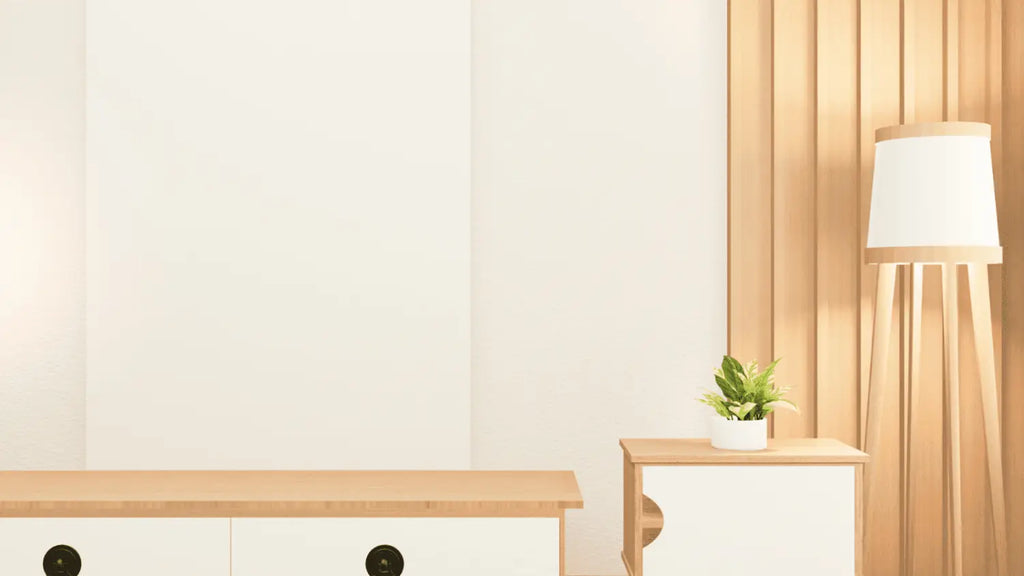
Take into account the size of the room and the furniture, the type of material, the style of the lamp and the light you want. Natural materials, paper, wood or woven fibers, are the ones that best evoke the Japanese atmosphere, and the materials and dimensions of each model are specified on its product page.
Also think about color and patterns, which should harmonize with your interior: a white or ivory shade goes with everything, while honey-colored weaving warms up a light wall.
Care and cleaning
Dust the lamp regularly with a soft cloth, dry, or a soft brush, with the lamp unplugged. Avoid direct sunlight and moisture, which damage the material, especially for paper or natural fiber models.
Other materials are less demanding: a ceramic lamp fitted with an LED bulb requires little maintenance, and its light source lasts much longer than a conventional bulb.
Where to buy a Japanese lamp?
In a specialist shop, you can see and touch the lamps before deciding, and benefit from a salesperson's personalized advice. A gift card, when the store offers one, also lets you give a Japanese lamp to a loved one while leaving them the choice of model.
Buying online gives access to a much wider choice, provided you use a reliable site that describes its products precisely. On Lustria, each product page presents the lamp with its dimensions and materials, and the price, which varies with the type, size and material of the model, is also shown there.
Making your own Japanese lamp
To make your own Japanese lamp, you need washi paper or rice paper, bamboo or wood sticks for the frame, glue and a few basic tools. Natural materials remain the most faithful to the original spirit.
The steps are simple: assemble the frame, stretch and glue the paper, then let it dry before fitting it over an existing lamp base, equipped with an LED bulb. You get a one-of-a-kind piece, a table lamp or a pendant shade, that adds a personal touch to your decor, without ever altering the electrical part, which is reserved for a qualified electrician.
Conclusion
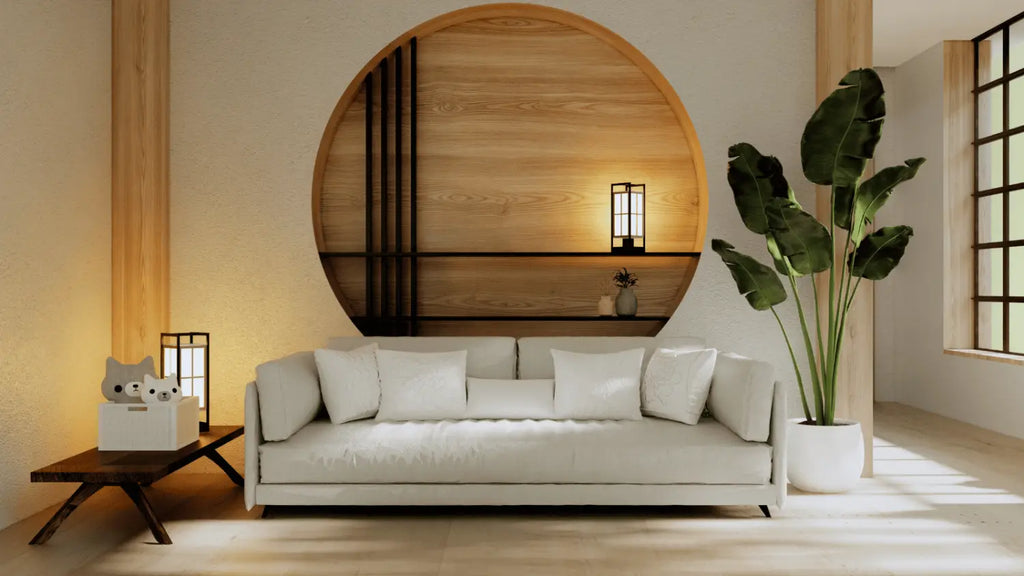
Japanese-inspired lamps bring serenity and elegance to your interior. Whether they take up a traditional form or offer a modern interpretation of it, they treat light as a material to be filtered and softened, which gives each one something of a small work of art.
Discover the Lustria selection to find the model that suits your style and your needs. To extend this atmosphere to the rest of the home, our wooden lamps share the same taste for calm lines.
Frequently asked questions about Japanese lamps
What characterizes a Japanese lamp?
A Japanese lamp is recognized by its clean lines, its natural or paper-like materials, and its soft, filtered light, which creates a soothing atmosphere.
The source disappears behind the shade, so the whole lamp seems to glow.
What are the different types of Japanese lamps?
There are three main families: chōchin, traditional paper lanterns often seen during festivals, ishidōrō, stone garden lanterns, and andon, indoor lamps made of washi paper and wood.
Each has its own style and use, from the zen garden to the peaceful living room, and all of them inspire contemporary light fixtures.
What is the difference between a chōchin lantern and an andon lamp?
The chōchin is a pleated paper lantern, originally portable, whereas the andon is a lamp with a paper-covered wooden frame, placed on the floor or on a piece of furniture.
Today's pleated lamps are closer to the former, and models with a geometric frame to the latter.
What materials is a Japanese lamp made of?
Mostly natural materials: washi paper and rice paper for the shades, because of their delicate texture and their ability to diffuse a soft light, and wood and bamboo for the structures.
Stone, durable and rustic in appearance, is reserved for garden lanterns.
What are the advantages of a rice paper lamp?
It diffuses a soft and pleasant light, which creates a warm and relaxing atmosphere. Paper is light, and its distinctive texture adds a natural elegance to any room.
On the other hand, it is sensitive to water and heat: it is used only with an LED bulb.
What is the cultural significance of Japanese lamps?
In Japan, the lantern is associated with light and spirituality: it is found in Buddhist temples as well as in zen gardens.
The ishidōrō stone lanterns evoke permanence and serenity, while the chōchin, lit during festivals, create a joyful and convivial atmosphere.
How do you choose the right Japanese lamp for your interior?
Start with the size of the room, then look at the material and the style of the lamp. In a bedroom, a paper and wood bedside lamp is ideal, whereas in a living room a bamboo pendant light or a ceiling light, installed by a qualified electrician, goes well with the table lamp.
Finally, make sure that the color and pattern complement your existing decor.
How do you bring a Japanese lamp into a modern decor?
Bet on neutral shades, light wood and simple lines: the Japandi style, which blends Japanese and Scandinavian influences, lends itself particularly well to this.
A wooden wall sconce with understated lines finds its place in a contemporary living room, and a bedside lamp in the same spirit warms up a modern bedroom.
Which bulb should you choose?
A warm-light LED bulb, around 2700 K, that gives off little heat: it is the only kind suited to a paper or fiber shade. Respect the maximum wattage indicated on the product page.
Some LED lamps have their light source built in. On a dimmer, check that the bulb is marked "dimmable".
How do you care for a paper or natural fiber lamp?
With a soft brush or a dry cloth, with the lamp unplugged, dusting it regularly. Avoid water, excessive moisture and direct sunlight, which eventually fades the paper.
Only the stone garden lanterns can be cleaned with water, using a soft brush, to remove dirt.
Can you make a Japanese lamp yourself?
Yes, with washi paper, bamboo or wood and a few basic tools. Many online guides detail how to make a chōchin- or andon-style shade.
It is a creative and rewarding way to personalize your decor, as long as you do not touch the electrical part of the lamp.