



563 products


LED ceiling light: modern, energy-efficient lighting
Key takeaways:
- An LED ceiling light is a light fixture mounted flush against the ceiling, whose light comes from integrated diodes or an LED bulb, and which lights the whole room for low energy consumption.
- Choose it according to the size of the room and the color of the light: warm white from 2700 to 3000 K in living areas, neutral white around 4000 K in the kitchen and the office.
- Installation and connection should be entrusted to a qualified electrician, and in a bathroom only a model rated IP44 or higher is suitable, according to the volumes defined by the NF C 15-100 standard.
Everything you need to know about LED ceiling lights
An LED ceiling light is a light fixture mounted flush against the ceiling, whose light comes from light-emitting diodes, either integrated into the fixture or housed in a bulb with a base. Among all our ceiling lights, it is the one that best combines low consumption with a slim design, since diodes take up very little space and give off little heat.
This slimness allows for extra-flat models, luminous rings or panels that light the whole room evenly. LED ceiling lights come in round, square or panel shapes, and in a variety of materials, such as metal, glass or aluminum, which offers a wide choice for every interior.
Styles and materials
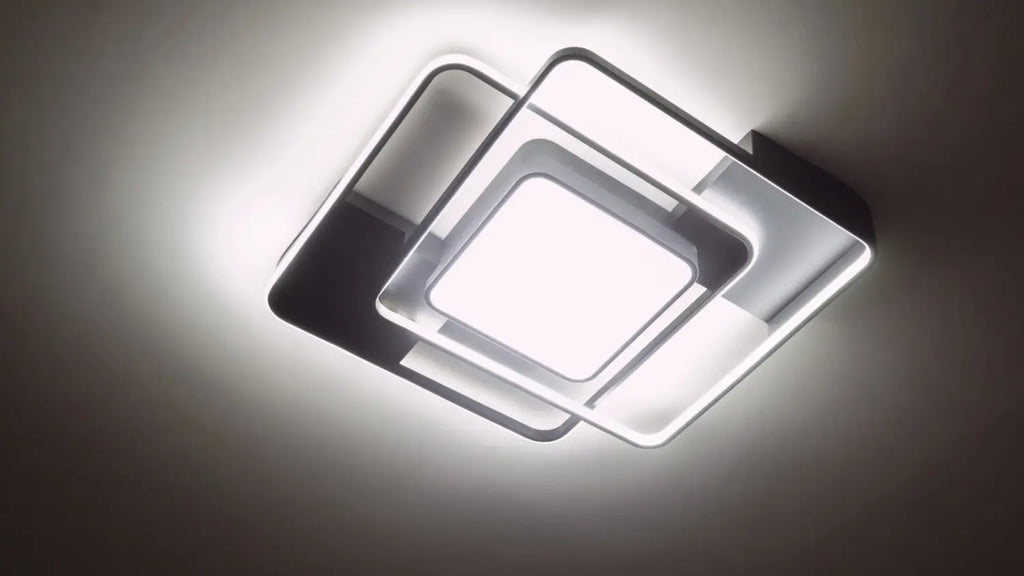
Whether it is a large ceiling light for the living room or a small, discreet model for a passageway, the variety of LED ceiling lights makes it possible to find the right light fixture for every place in the home. A living room ceiling light readily stands out as a decorative element. A hallway ceiling light, by contrast, is compact and discreet.
The designs range from classic to contemporary: round or square ceiling lights, rings, extra-flat panels or remote-controlled models, not forgetting integrated LED spotlights and more elegant ceiling fixtures. Black or gold metal, glass, aluminum, acrylic and wood share the selection, and many LED ceiling lights offer an adjustable color temperature and intensity.
Choosing your ceiling light
To choose an LED ceiling light, three factors matter before all others: the luminous flux, expressed in lumens, which indicates the amount of light produced, the color temperature, expressed in kelvins, which gives its shade, and whether or not the intensity can be varied. This information appears on each product page, as do the base and the maximum power accepted when the fixture takes a bulb.
Warm white (2700 to 3000 K) suits living areas, while neutral white, around 4000 K, suits kitchens and offices. If you wish to adjust the light, turn to a dimmable ceiling light, controlled by a wall dimmer or a remote control. Some models, depending on the product pages, can also be controlled from a system compatible with smart home assistants.
| Room | Recommended light color | Tip |
|---|---|---|
| Living room, bedroom | Warm white, 2700 to 3000 K | Adjustable intensity, to go from full lighting to subdued light |
| Kitchen, office | Neutral white, around 4000 K | Even light on the work surface |
| Hallway, entryway | Warm white or neutral white | Compact or extra-flat model |
| Bathroom | Neutral white | IP44 or higher, rating shown on the product page |
In a bathroom, only a model with a suitable IP rating can be appropriate: the NF C 15-100 standard defines safety zones around the bathtub and the shower, and an IP44 rating is the minimum. Among our bathroom ceiling lights, choose a model whose product page shows this rating.
Integrated LED or LED bulb?
An integrated LED allows a very slim design, but it cannot be replaced like a bulb, since the light source is part of the fixture. A ceiling light with a base, on the other hand, accepts a replaceable LED bulb, which gives you the freedom to change the color or the power, within the limit shown on the product page.
Both solutions use little energy and give off little heat. If the ceiling light is connected to a dimmer, check that the bulb is marked "dimmable", or that the integrated LED model is stated to be compatible with dimming.
Installation and maintenance
Entrust the installation to a qualified electrician: a ceiling light is fixed to the ceiling and connected directly to the electrical supply. Many LED ceiling lights are designed for simple mounting, but the fixing and the connection remain a job for a professional.
For maintenance, dust the fixture with a soft cloth, once it is switched off and cooled, without abrasive products. This regular cleaning is enough, since LEDs, being sturdy and durable, need far less attention than traditional bulbs, which had to be replaced often.
An LED ceiling light built to last
Choosing an LED ceiling light helps reduce the home's energy consumption, since diodes produce a lot of light for little electricity. Their long lifespan also spaces out replacements: where a conventional bulb was changed regularly, an LED source stays with the fixture for many years.
For this advantage to hold over time, it is best to choose a sturdy fixture and to check on the product page whether the source is integrated or replaceable. A dimmer adds to this efficiency, letting you lower the intensity when full lighting is not needed.
The latest LED ceiling light trends
Current trends highlight finishes in gold or black metal. A gold ceiling light warms up a decor in neutral tones, while matte black underlines the lines of a contemporary interior, and geometric shapes, circles or squares, largely dominate new arrivals.
Features are evolving at the same pace as the lines: variable-intensity lighting is becoming widespread, and ultra-thin LED panels almost make the fixture disappear, leaving only the light. A black ceiling light with graphic lines is a good illustration of this pursuit.
Detailed buying guide
Three questions guide the choice of an LED ceiling light: the size of the room, the style of the decor and your specific lighting needs. The area to be lit determines the diameter of the fixture and the luminous flux to look for, while the style guides the shape and the material, from the understated metal of a modern ceiling light to the wood of a more natural interior.
Next come the technical characteristics, to be read on the product page: color of the light, compatibility with a dimmer, type of source and, for a bathroom, moisture protection. Under a high ceiling or above a table, an LED pendant light advantageously takes over from the ceiling light.
The advantages of the LED ceiling light
LED ceiling lights combine several strengths: greater energy efficiency than traditional lighting, a long lifespan and a wide variety of styles and sizes. Mounted flat against the ceiling, they are also suitable for rooms with low ceilings.
They can just as well create a warm atmosphere, with a soft light, as effectively light a large room, with an intense light. A warm light ceiling light thus sets a cozy atmosphere in a living room, while a more powerful model, in neutral white, gives a workspace all the brightness it needs.
Ideas and inspiration for the LED ceiling light
There is no shortage of decorating ideas for showcasing an LED ceiling light, and the photos on our product pages show how these fixtures transform the look of a room. Above work surfaces, a kitchen ceiling light in a panel or linear format spreads an even light, with no shadowy areas.
A bedroom ceiling light with adjustable intensity goes from full morning light to subdued evening lighting. In an entryway or an office, a luminous ring or a composition of circles becomes a true focal point.
Where to buy a ceiling light?
At Lustria, each product page states the characteristics and the price of the fixture: dimensions, materials, type of light source, color of the light and, where applicable, protection rating. This information allows you to compare models with one another and to check that the ceiling light suits the intended room.
Measure the room and locate the position of the light point on the ceiling, then compare these measurements with those on the product page. If you are unsure between two models, our customer service team will answer your questions.
Frequently asked questions about LED ceiling lights
Here are the answers to the most frequent questions about choosing, installing and using an LED ceiling light.
How can you fit an LED ceiling light into a minimalist interior?
Choose a clean design and a neutral color, such as black, white or gray. Simple shapes, circle or square, with a matte or metallic finish, complete the minimalist spirit without overloading the space.
A flat or recessed ceiling light is ideal, as it blends into the ceiling while providing even and efficient lighting.
What are the differences between an LED ceiling light and traditional lighting?
The LED ceiling light uses less electricity and lasts longer. Unlike incandescent bulbs, withdrawn from sale between 2009 and 2012, and halogens, mostly withdrawn in 2018, LEDs produce little heat and give excellent light quality.
LED ceiling lights also offer advanced features, such as intensity adjustment and remote control.
How does an LED ceiling light improve the energy efficiency of the home?
It uses less electricity to produce the same amount of light as a traditional bulb, which reduces the home's consumption and, as a result, the electricity bill.
Its long lifespan also means that you replace it far less often, which avoids buying and throwing away spare bulbs on a regular basis.
What criteria should you use to choose the color temperature of an LED ceiling light?
The first criterion is how the room is used, because color temperature, measured in kelvins, directly influences the atmosphere. For rest areas, such as the bedroom and the living room, choose a warm shade (2700 to 3000 K), which creates a welcoming and restful atmosphere.
For the kitchen and the office, prefer a neutral white, around 4000 K, which gives a brighter and more invigorating light.
Why is an LED ceiling light a sustainable choice for lighting the home?
Because it uses less energy and lasts longer than traditional bulbs: its light source needs replacing far less often.
To benefit from it for a long time, choose a sturdy fixture and check on the product page whether the source is integrated or replaceable.
How do you install a multi-spot LED ceiling light for optimal lighting?
By entrusting the installation to a qualified electrician, after deciding on the position of the spots that will give balanced light coverage. The positions are marked on the ceiling, taking into account the direction in which each spot will be aimed.
The professional makes sure that the circuit suits the total load of the LEDs, then follows the manufacturer's instructions to fix the ceiling light and connect the wires safely.
What are the advantages of a remote-controlled LED ceiling light?
Ease of use and flexibility: depending on the model's functions, you adjust the intensity, change the color of the light, and switch it on and off without getting up.
It is particularly useful in a large room, or for a person with reduced mobility. Some models also make it possible to program lighting scenes, depending on their product page.
Can you install an LED ceiling light in a damp room, such as a bathroom?
Yes, provided that it is designed for this use and has a protection rating suited to water and steam, IP44 or higher. The NF C 15-100 standard sets the safety zones to be respected around the bathtub and the shower.
These ceiling lights are sealed to keep moisture out, which makes them safe and durable. The rating appears on the product page, and the installation is a job for a qualified electrician.
What influence does the design of an LED ceiling light have on the atmosphere of a room?
A major one: an elegant, modern design brings a sophisticated look, while more organic shapes and natural materials, such as the glass or wood of a wooden ceiling light, create a warmer and more welcoming atmosphere.
The way the ceiling light diffuses the light also changes the perception of space, to the point of making a room seem larger or more intimate.
How do you choose an LED ceiling light for a large room without overloading the space?
Opt for a fixture with a simple but effective design. A large ceiling light with several light sources offers sufficient coverage without visually dominating the space.
Also consider LED panels and recessed models, such as our recessed spotlights, which give plenty of light while keeping a discreet and elegant appearance.